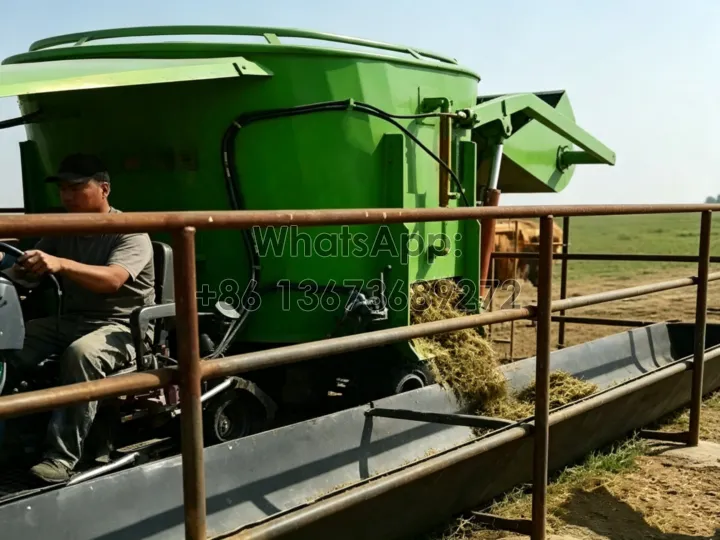
Kuilvoer Voeding Stelsels: 'N Volledig Gids vir Moderne Veeplase
Die phrase “kuilvoer voeding stelsel” kry gebruikte los. Sommige verkoper mean net 'n kuilvoer spreader; others mean 'n fully integrated pipeline vanaf bunker tot voerbak.
In hierdie gids, Ek gebruik dit in die broader sense: die vol stel van toerusting en workflow daardie neem fermenteer ruvoer vanaf berging en lewer 'n eenvormig rantsoen tot die dier. Die distinction matters omdat 'n “stelsel” ontwerp besluit—waar die menger lewend, hoe voer beweeg tussen stages, wie bedryf wat—het 'n groter impact op arbeid en voer afval as enige individual masjien aankoop.
3 Algemeen Kuilvoer Voeding Stelsel Architectures
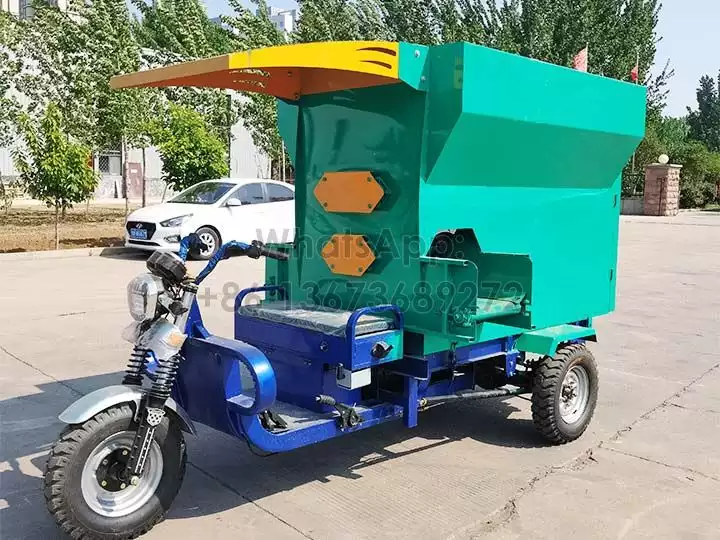
Architecture 1: Handleiding + Spreader (Lowest Belegging)
Kuilvoer is afgelaai deur hand of met 'n voorlaaier in 'n small vaste menger of direk in die kuilvoerstrooier. Die spreader driewiel hanteer distribution. Belegging: USD 3,000-6,000. Arbeid: 2-3 werkers per voeding skof. Beste vir: 20-60 koei bedrywighede waar kapitaal is beperk en arbeid is goedkoop.
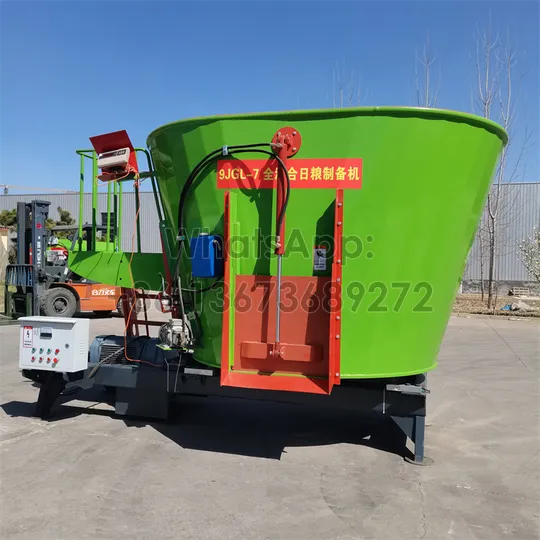
Architecture 2: Vaste TMR Menger + Spreader (Mid-Reeks)
'N vaste TMR Voer Menger Is geïnstalleer by 'n bevestig ligging near die kuilvoer bunker. 'N voorlaaier groep ingredients in die menger. Gemeng TMR uitlaat in 'n driewiel spreader vir distribution. Belegging: USD 5,000-15,000. Arbeid: 1-2 werkers per skof. Beste vir: 60-200 koei bedrywighede waar rantsoen consistency matters maar vol mobiliteit isn’t benodig.
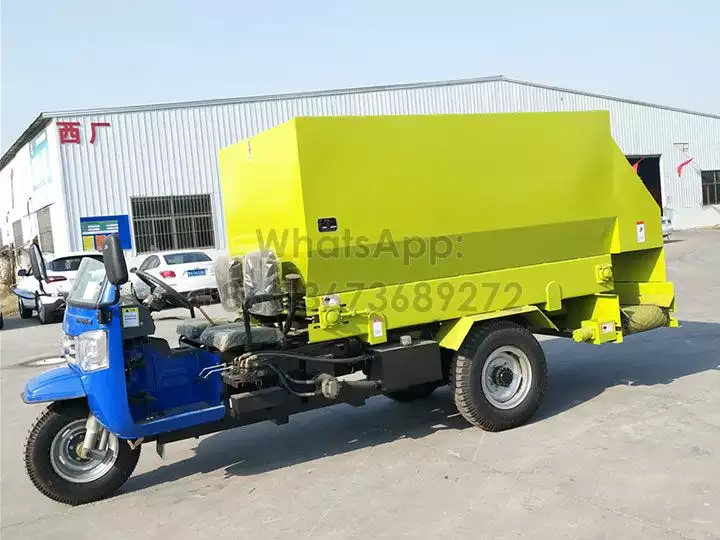
Architecture 3: Selfoon TMR Voer Menger met Side Uitlaat (Highest Doeltreffendheid)
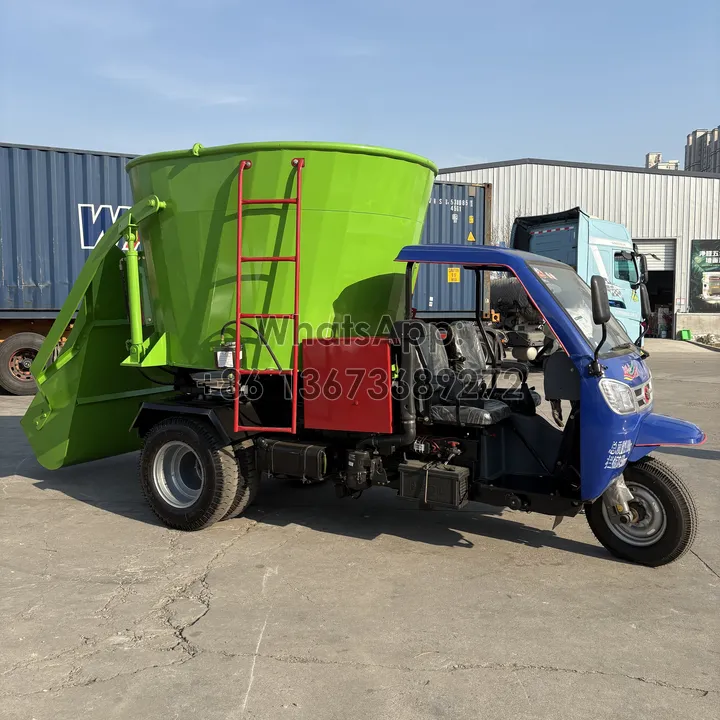
'N vragmotor-gemonteer TMR menger (Taizy 5m³ vertikaal auger model met 80cm laai hoogte, 5400×2300×2300mm footprint) vrag, mengsel, weeg, en uitlaat in een selfoon eenheid. Geen separate spreader benodig. Belegging: USD 5,000-20,000. Arbeid: 1 operateur per skof. Beste vir: 200+ koei bedrywighede of kommersiële feedlots.
5 Ontwerp Tradeoffs
- Vaste vs selfoon voer menger: Vaste kuilvoer menger is cheaper en makliker tot handhaaf maar vereis 'n separate beeste voer spreader en 'n tweede operateur. Selfoon menger koste meer upfront maar konsolideer arbeid in een rol.
- Vertikaal vs horisontaal auger: Vertikaal augers hanteer lank vesel (heel bale) beter; horisontaal augers mengsel vinniger op pre-gekap materiaal maar won’t tear open 'n baal.
- Elektries vs diesel krag: Elektries het laer per-uur koste en is quieter (beter vir indoor parlors) maar benodig betroubaar grid of generator backup. Diesel is grid-independent en bied hidroulies transmission maar het hoër brandstof en instandhouding koste.
- Driewiel vs vragmotor-gemonteer spreader: Driewiel is nimble in styf skuur alleys (1.5-2.0m wyd) en cheaper. Vragmotor-gemonteer spreaders hanteer 200+ ton-per-dag bedrywighede maar benodig 3m+ alley wydte en turning space.
- Op-bord scale vs handleiding groep: op-bord vrag sel (4 sensors + XK3190-'N6 toon op die vragmotor-gemonteer TMR) verseker rantsoen accuracy binne 0.5%. Handleiding groep relies op operateur judgment en drifts 3-5% oor 'n skof.
Hoe tot Kies die Right Kuilvoer Voeding Stelsel Architecture?
Walk deur hierdie drie vrae volgorde:
- Vraag 1: hoe baie diere en hoe baie distinct rantsoen? 'N single-rantsoen plaas onder 100 koeie is put-served deur Architecture 1 of 2. Multiple rantsoen (lactating vs droog koeie, voltooi beesvleis vs teling voorraad) stoot u toward Architecture 2 of 3 met weeg-scale accuracy.
- Vraag 2: hoe far is die voer alley vanaf die kuilvoer berging? Onder 30m favors 'n vaste menger + kuilvoer voer spreader. Oor 50m favors selfoon TMR met side uitlaat. Die reis time voeg by op: by 8 km/h, 'n 100m rond reis is 45 sekondes per siklus, watter oor 4-5 siklus per meel is 4 minute vermors per koei groep.
- Vraag 3: wat is die plaaslik arbeid mark? Waar arbeid koste USD 100-200/maand per werker, handleiding Architecture 1 steeds maak sense. Waar arbeid koste USD 400+/maand, die arbeid besparing vanaf Architecture 2 of 3 pay terug die kapitaal binne 18-24 maande.
Werklik-Wêreld Stelsel Examples
Drie onlangs Taizy installasie illustrate die reeks:
- 40-koei suiwel, sentraal Meksiko: Architecture 1. TZ-3 elektries spreader + handleiding kuilvoer hantering. 2 werkers per skof, USD 3,200 totaal toerusting belegging.
- 120-koei suiwel, Kenia Rift Vallei: Architecture 2. 5m³ vaste TMR menger + TZ-5 diesel spreader. 1 werker op die menger, 1 op die spreader. USD 10,500 totaal.
- 350-koei suiwel, Saudi Arabia: Architecture 3. Vragmotor-gemonteer 12m³ TMR menger met hidroulies side uitlaat. 1 operateur bedek alle kraal in 2 ure. USD 11,000 totaal.
Algemeen Kuilvoer Voeding Stelsel Mistakes
- Menger en spreader vanaf verskillende vendors met geen diens alignment: wanneer een breek en die verskaffer blaam die other, die plaas sits idle vir weeks. Koop vanaf een verskaffer met gebondel diens.
- Undersized elektriese diens vir 'n elektries spreader: 'N 72V battery verpak benodig 'n toegewyd 3-4 kW heffing kring. Deel die kring met parlor toerusting reis breakers by peak melk time.
- Geen backup krag vir elektries stelsels: 'N single 8-uur grid outage gedurende somer verhit kan spoil 'n vol dag’s TMR mengsel. Begroting USD 1,500-3,000 vir 'n outomaties dra oor skakelaar en small generator.
GEV van Kuilvoer Voeding Stelsel Architecture
Kan Ek expand vanaf Architecture Ek tot Architecture 2 sonder vervang die spreader?
Ja. Die voer spreader is downstream van die menger in beide architectures. Wanneer u voeg by 'n vaste TMR menger. Die existing TZ-3 of TZ-5 spreader stays in die workflow. U’ll soos opgradering die spreader kapasiteit binne2-3 jaar van die menger installasie, maar nie immediately.
Wat is die typical payback period vir beweeg vanaf Architecture 1 tot Architecture 2?
Op 'n 100-koei suiwel in 'n mid-loon mark, die arbeid besparing (1 fewer werker per skof) plus voer afval vermindering (5-8%) recovers die USD 12,000-20,000 belegging in 14-22 maande. Vinniger in high-arbeid-koste streke; stadiger waar arbeid is goedkoop maar rantsoen gehalte matters (e.g., vir premium melk kontrak).
Doen Taizy bied 'n vol stelsel ontwerp diens?
Ja. Vir houer bestellings, ons verskaf 'n uitleg tekening wys masjien placement, elektriese vereistes, en workflow direction. Vir kompleks multi-masjien installasie, ons engineering span kan doen 'n video oproep terrein survey en produseer 'n pasgemaak stelsel proposal by geen heffing.
Ontwerp U se Voeding Stelsel
Asseblief vertel ons u se kudde grootte, uitleg, huidig workflow, en target arbeid tel. Ons’ll trek 'n stelsel architecture met masjien list en begroting.