Comment bien choisir Ensilage Spreading Machine pour Votre Exploitation: A Practical Guide
Walking dans a élevage approvisionnement showroom et asking pour “a ensilage spreading machine” can return cinq différents machines avec cinq différents prix tags. The gap entre the cheapest électrique 3m³ unit et the diesel-motorisé 5m³ tricycle spreader can exceed USD 4,000—toutefois les deux sont technically “ensilage spreaders.”
Les plus exploitation owners I’avez worked avec plus de-acheter sur capacité et under-think au sujet de leur journalier feeding workflow. Ce guide walks vous grâce à 7 decision points in the commande ils actually matter sur a working exploitation.
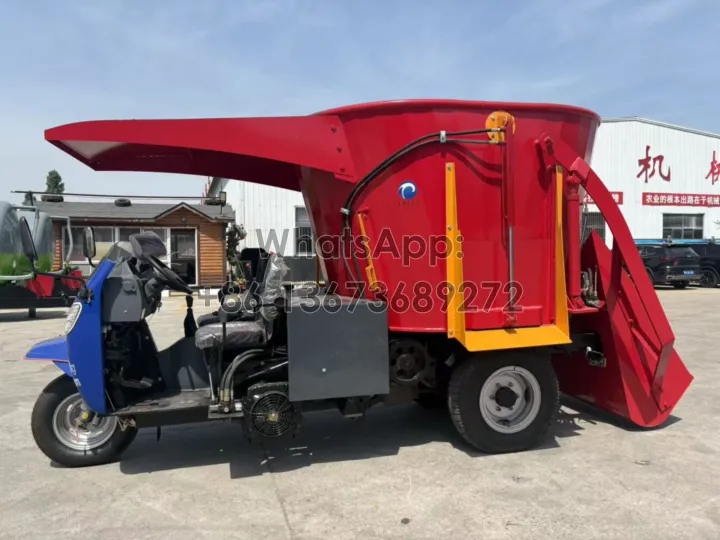
1. Start Avec Journalier Aliment Volume, Not Herd Taille
Herd taille est misleading car il ’ account pour the ration votre nutritionist actually prescribes. A 60-cow exploitation laitière feeding a élevé-fourrage TMR (55% ensilage, 25% foin, 20% concentrate) push grâce à roughly 4.8 tonnes of mixed aliment per jour. A 200-cow viande lot sur a faible-fourrage diet might traiter the même tonnage comme a 90-cow laitier.
Calculez le chiffre réel : poids quotidien d’aliment = nombre de têtes × ingestion de matière sèche × 1.4 (correction d’humidité pour les rations à base d’ensilage). Dimensionnez ensuite la caisse de l’épandeur à 1,2× ce volume, pour ne jamais la remplir au-delà du bord.
2. Vertical vs Horizontal Ensilage Spreading Machine
La différence de forme n’est pas cosmétique. Épandeurs à vis verticale traitent mieux les matières à fibres longues (balles entières, foin non haché) car la vis verticale soulève et déchire la matière. Épandeurs à palettes horizontales conviennent mieux à l’ensilage pré-haché ou en brins courts où l’aliment circule le long de l’auge.
Rule of thumb from notre 2024 Kenya et Sud Afrique shipments: si vous’êtes feeding directement from a TMR mixer’est production (déjà 3-5 cm chop length), horizontal est faster. Si vous’êtes chargement ensemble round bales et coupe in the spreader, go vertical.
3. Diesel contre Électrique: L'arbitrage concret
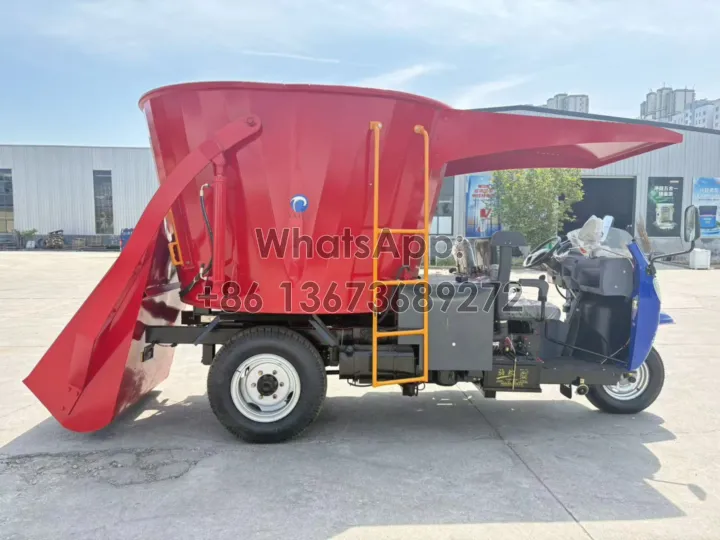
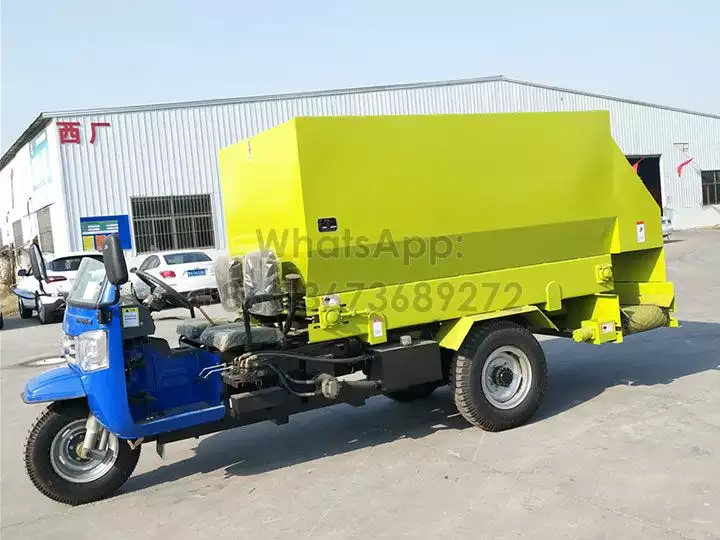
La plupart des acheteurs supposent diesel sont “plus robuste” et électrique est “fragile.” Dans L'épandeur d'ensilage segment, que’s largement mythe. Les deux Taizy modèles nous expédions produisent identique 60cm épand hauteur et déchargement bidirectionnel. Le réel facteurs différenciants:
- Diesel (TZ-5, 5m³): 1 batterie (12V), 750-16 + 600-14 pneus, 5m³ trémie, 4700×1700×2200mm emprise au sol. Meilleur pour exploitations avec non alimentation triphasée ou instable reseaux.
- Électrique (TZ-3, 3m³): 6 batteries (72V), propulsion arrière, 3600×1500×2000mm, 3m³ trémie. Meilleur pour en intérieur barns, plus petit herds, et exploitations avec stable alimentation monophasée.
Diesel modèles généralement bottelez a transmission hydraulique et frein à huile—meilleur pour extérieur irrégulier terrain. Électrique modèles sont plus silencieux (important pour en intérieur laitier salles de traite) et a abaisse par heure coût d'exploitation, mais exige 6-8 heures de charge entre postes.
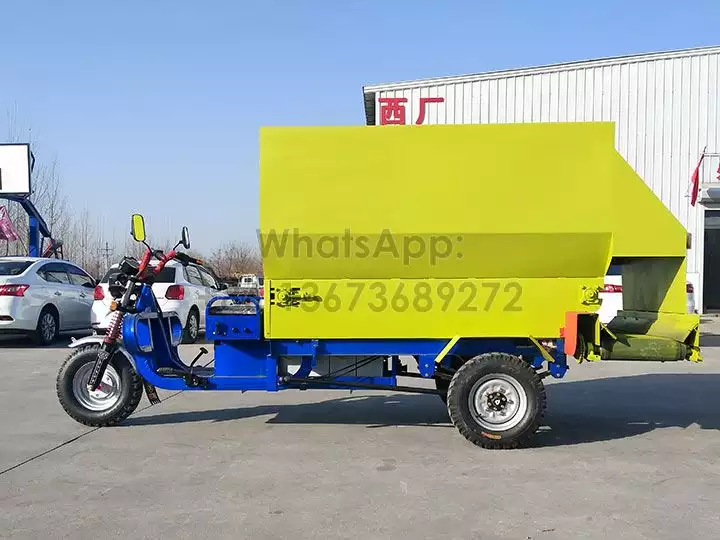
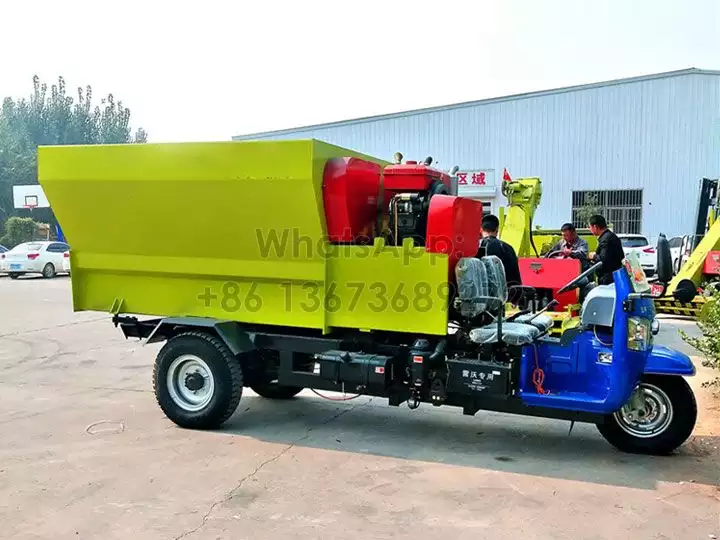
4. Trémie Capacité: 3m³ contre 5m³
Acheter la caisse plus grande « au cas où » est l’erreur la plus fréquente. Une caisse surdimensionnée abaisse la densité effective de l’aliment, provoque une distribution irrégulière dans les pentes et ajoute 300 à 500 kg de poids mort au châssis du tricycle. Adaptez la caisse à épandeur d'ensilage la charge utile de votre tracteur.
5. Mélange Fonction ou Spread-Only?
Certains épandeurs sur tricycle servent aussi de mélangeur léger (TZ-5 diesel). Si vous possédez déjà un mélangeur fixe TMR Aliment Mixer, vous n’avez pas besoin de la double fonction — les épandeurs purs sont plus légers, plus simples et 15 à 20 % moins chers. La règle : la double fonction n’est rentable que dans les exploitations de 100 animaux et plus où un mélangeur fixe n’est pas encore justifié.
6. déchargement Direction: Simple contre Bidirectionnel
déchargement bidirectionnel (standard activé les deux Taizy modèles) permet d'opérateur épandent à soit côté du couloir d'alimentation sans faire demi-tour. Activé a 3m-wide central couloir alimentation deux parallèle rangs de headlocks, ce coupes temps d'alimentation par 35-40% d'après retours clients de notre Burkina Faso et Ouzbékistan installations.
7. entretenez après-vente: pièces de rechange et entretient local
Le le plus économique épandeur devient le la plupart des coûteux si a contrôle board ou hydraulique scelle tombe en panne et prend 6 semaines à s'approvisionner. Confirmez que le fournisseur stocks usez pièces (chaînes, roulements F206/F210, convoyeur à raclettes courroies, frein seals) et expédie sous 5-7 jours. Taizy expédie usez pièces dans L'identique conteneur comme la machine pour Africain et Asie du Sud-Est Asiatique acheteurs à éviter ce exact problème.
tableau de recommandation rapide
| profil d'exploitation | Recommended Modèle | Trémie | Pouvoir |
|---|---|---|---|
| 20-50 vaches, stabulation couverte, stable réseau | TZ-3 (électrique) | 3m³ | 72V batterie |
| 50-150 vaches, mélangé en intérieur/extérieur | TZ-5 (diesel) | 5m³ | Moteur diesel |
| 150+ vaches, non fixe mélangeuse | TZ-5 (diesel, mélange) | 5m³ | Diesel + hydraulique |
| bovins viande, rugueux terrain, non réseau | TZ-5 (diesel) | 5m³ | Moteur diesel |
FAQ de Taizy épandeur d'ensilage
Comment often devrait I refill the ensilage spreader bin per jour?
La plupart des 50-100 élevage laitier exploitations rechargez 2-3 fois par jour. si vous’re refilling plus que 4 fois, le trémie est trop petit. Si moins que 1.5 fois, le trémie est oversized pour votre troupeau et alimente densité.
Can a ensilage spreading machine également traiter dry foin?
Yes, pour chopped dry foin. Ensemble long-stem foin (plus de 15cm) jam the scraper conveyor. Pour dry foin bales, utiliser a dedicated foin bale processor ou pre-chop to under 8cm avant chargement.
Est a ensilage spreader the même comme a aliment mixer wagon?
No. A TMR aliment mixer chops et blends ingredients avec precise poids ratios. A ensilage spreader principalement discharges déjà-mixed aliment to the bunk. Some tricycle units combine les deux fonctions, mais à réduit mixing precision than a dedicated TMR mixer wagon.
recevez une recommandation personnalisée d'épandeur
Indiquez-nous votre taille de troupeau, votre ration quotidienne, votre situation énergétique et la configuration de votre bâtiment. Nous recommanderons un modèle précis avec coût d’expédition jusqu’à votre port. Contactez-nous via WhatsApp : +86 13673689272 ou par email info@taizyagromachine.com.