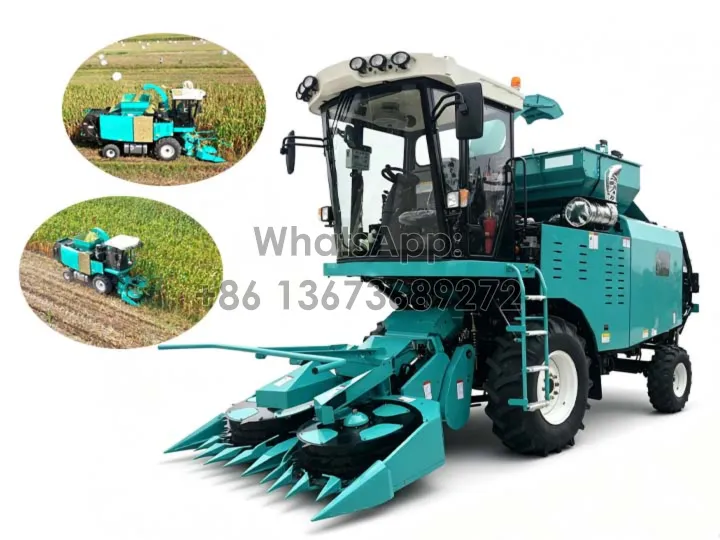
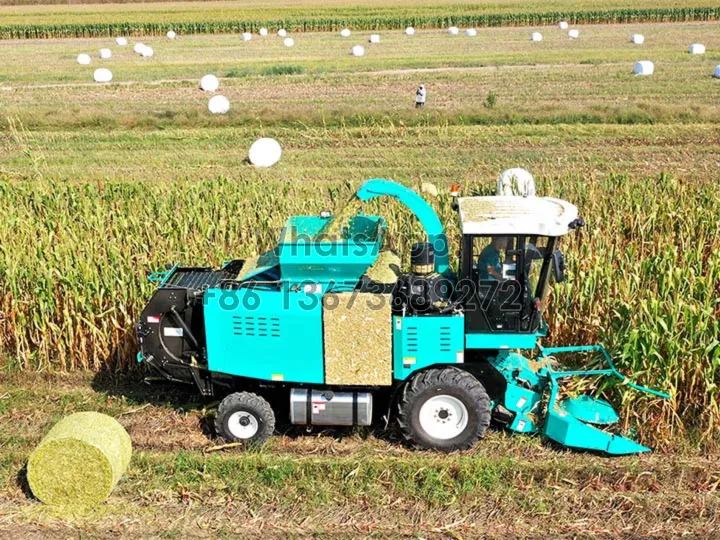
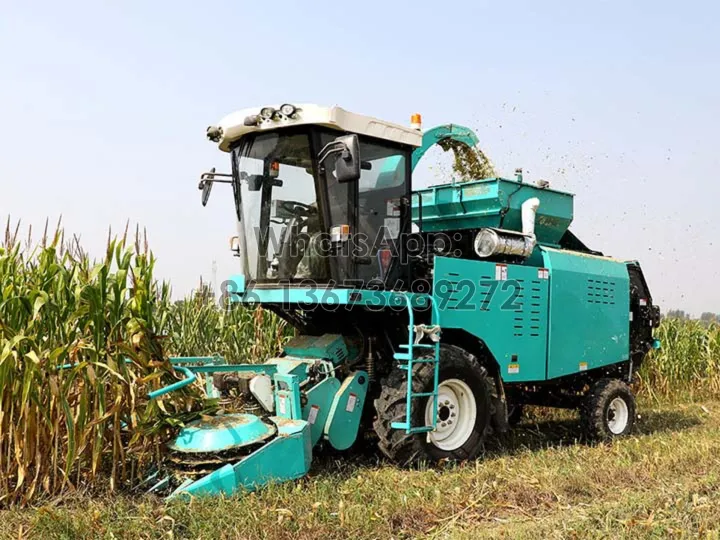
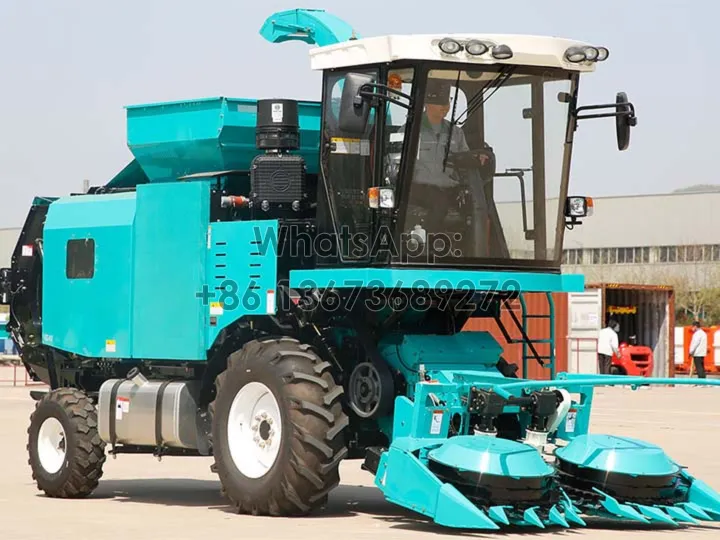
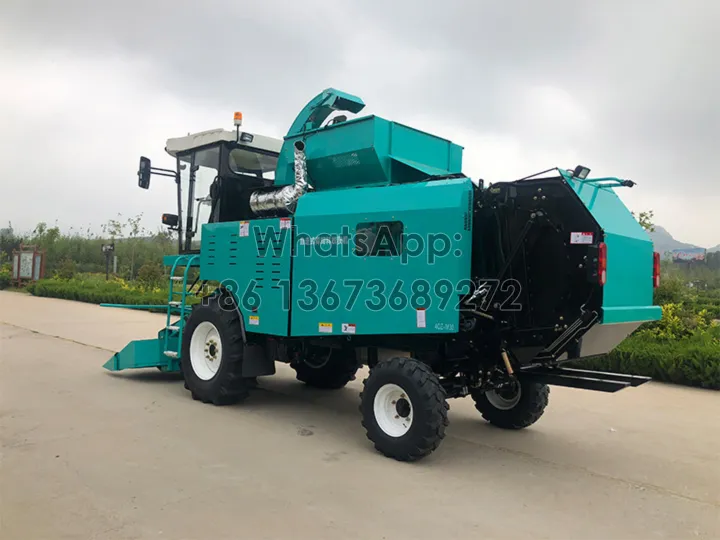
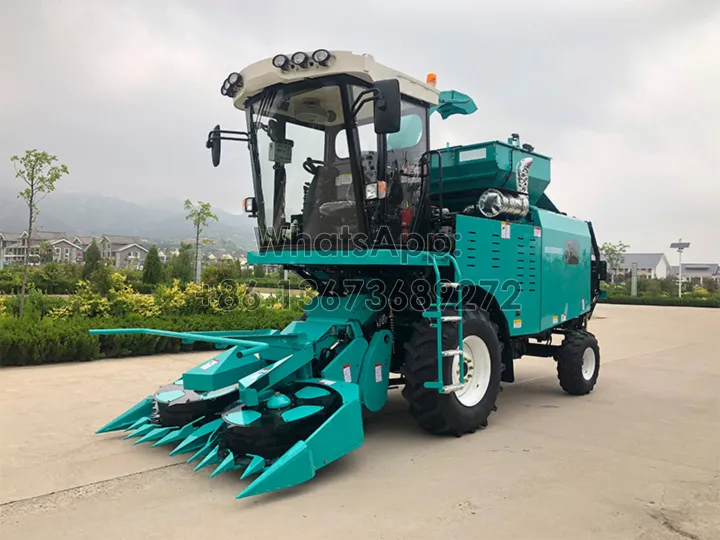
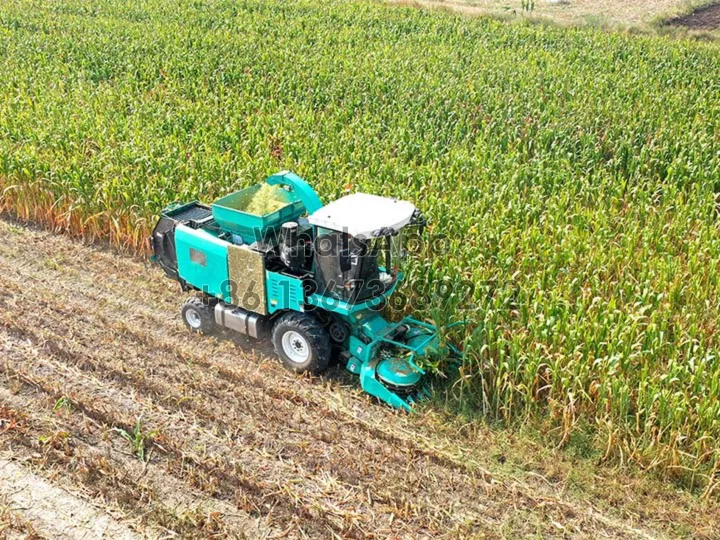
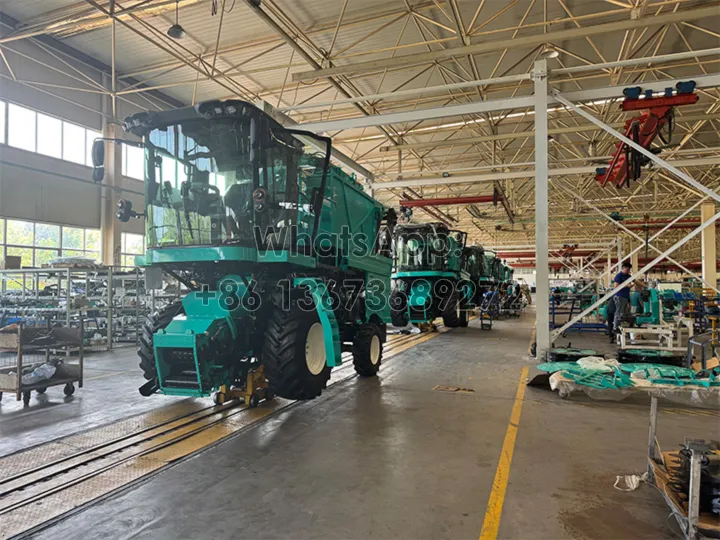
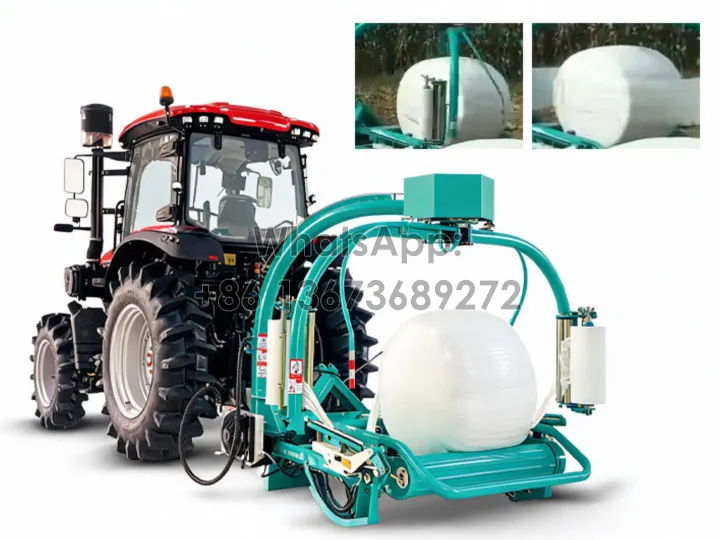
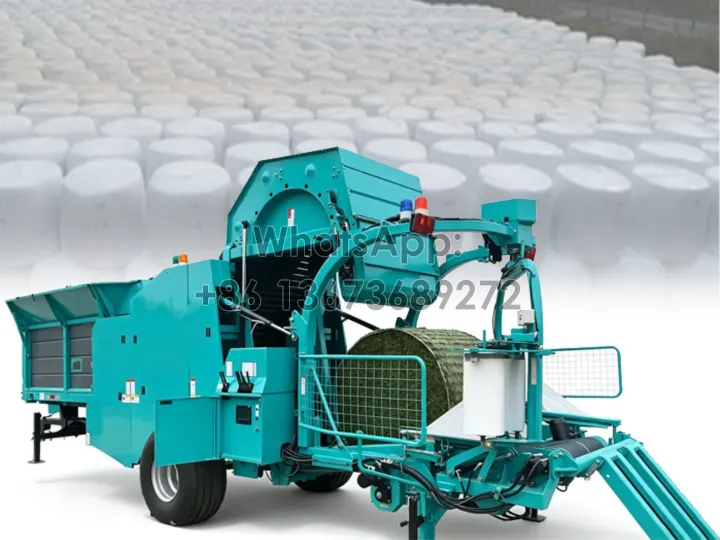
The 4QZ-M series forage harvester baler is a self-propelled machine that combines four jobs in one pass: standing crop cutting, stalk chopping, kernel cracking, and round baling. It produces 500 kg round bales at 750 kg/m³ density with a counter-roll grain cracking rate above 98%. Wrap the bale within three minutes of discharge and you have anaerobic fermentation-ready silage with lactic acid stability for two to three years of outdoor storage.
One operator, one machine, finished bales on the ground—no transport trucks waiting, no packing tractors, no weather risk. This is the machine a 1,000-hectare corn operation, a 500-cow dairy, or a custom harvesting contractor in reaches for when the silage window is short and the bunker silo can’t keep up.
silage harvesting baling machineforage harvesting and baling machine
Working Video of Forage Harvester Baler
Harvest, Bale & Wrap Silage in One Pass! | 3-in-1 Silage Harvester, Baler & Wrapper #silage
video of corn silage harvester baler
What Is a Forage Harvester Baler?
A forage harvester baler performs the full silage harvest sequence in a single pass: cut standing green forage, chop the stalks to silage length, crack the kernels to release starch, and compress the loose material into a round bale. Unlike a traditional bunker silo operation—which requires a harvester, transport trucks, and a packing tractor working around a fixed pit—a harvester baler drops finished bales on the field for later wrapping and transport.
The 4QZ series solves the biggest problem of traditional bunker silage: uneven packing density. The refined material compression system produces a consistent 750 kg/m³ density across every bale. Tight, uniform bales mean better lactic acid fermentation, less aerobic spoilage, and a feed product that can be sold or transported as a commodity rather than consumed on-site.
silage harvesting baling wrapping machine
Two Models, Same Bale Spec, Different Working Width
Key Features and Advantages of Forage Harvester Baler
Integrated harvesting and baling in one pass. The 4QZ series removes the need for a separate pickup wagon or transport truck following the harvester. Cut, chop, crack, and bale—finished bales on the ground as the machine moves forward.
Counter-roll grain cracking above 98%. Whole-plant corn silage with intact kernels passes through the digestive tract largely undigested. The dual-roll cracker smashes each kernel, releasing starch that the cow converts into milk or the steer converts into weight gain. Less undigested grain in the manure, more energy in the ration.
750 kg/m³ bale density for anaerobic fermentation. A tight, uniform bale excludes oxygen and provides a stable environment for lactic acid bacteria. The result is lower pH, higher lactic acid, and a stable feed that keeps 2–3 years outdoors if the wrap is intact.
Refined compression technology (4QZ-M2600). The M2600 is a Chinese-pioneer design that solves the long-standing problem of uneven packing density in traditional bunker silos. Every bale from the M2600 has the same density, the same moisture distribution, and the same fermentation profile.
Japanese technology with imported key components (4QZ-M30 G4). Critical wearing parts—bearings, hydraulic valves, electronic controls—come from Japanese suppliers. The result is a documented low failure rate and predictable maintenance intervals for farms that can’t afford downtime in a 10-day silage window.
One-operator workflow. From cab startup to finished bale on the ground, one person runs the entire cycle. The 4QZ-M30 G4 uses full automatic control—cut, convey, chop, crack, bale—without a second operator.
Roll bar baling chamber. Roll bar produces higher density at lower power, handles stalky material without slipping, and tolerates small rocks and dirt clods without chamber damage.
3-minute sealing window. Drop the bale, drive 50 meters, return with the wrapper, wrap within 3 minutes. Quick sealing locks in freshness and maximizes nutrient retention—particularly the soluble sugars and vitamins lost in delayed bunker operations.
Interchangeable headers. The straight-cut header can be swapped for alternative cutting tables to handle sorghum, millet, alfalfa, or Napier grass without buying a second machine.
Standardized 500 kg bales enable commerce. A 500 kg bale at 750 kg/m³ is the right size to load on a flatbed, the right weight for one worker to handle with a bale grab, and the right unit for buying and selling silage as a commodity in regional markets.
Lower labor cost across the harvest chain. Replace a cutting crew, a transport truck, a packing tractor driver, and a bunker operator with one skilled harvester operator. On a custom harvesting job, this is the difference between a profitable season and a marginal one.
forage harvester and baler for salestraw harvester and baler
Working Process: From Standing Crop to Sealed Bale
Cut. The straight-cut header shears standing corn at the base. The disc cutter runs at high RPM to keep the cut clean even in lodged or weedy fields.
Convey and chop. The cut crop moves up the feed roller into the drum chopper. The drum cuts stalks to silage length (typically 10–30 mm) without pulverizing leaves, preserving the digestible fiber fraction.
Crack grain. Chopped material passes through the counter-roll cracker. Two rolls running at different speeds shear every kernel, releasing starch for rumen microbes. Documented cracking rate above 98%.
Bale. The chopped, cracked forage enters the roll bar chamber, where rotating bars compact the material into a 1000 × 850 mm cylindrical bale. Target weight 500 kg at 750 kg/m³ density.
Discharge and wrap. The finished bale is ejected onto the ground. A trailing or follow-up wrapping machine applies 4–6 layers of silage film. With wrapping completed within 3 minutes of discharge, lactic acid fermentation begins inside an oxygen-free environment.
The combined cycle time of this forage harvester baler is roughly 60–90 seconds per bale. A 10-hour operating day at this rate produces 350–500 bales—175–250 tons of finished silage ready for storage or sale.
green fodder harvester baler machine
Compatible Crops and Harvest Conditions
Crop
Typical Moisture at Baling
Best Use
Whole-plant corn (maize)
60-70%
Dairy and beef high-energy silage
Sorghum
65-72%
Drought-region forage, beef cattle
Millet and Sudan grass
65-70%
Hot-climate forage
Alfalfa (pre-bud to early bud)
55-65%
High-protein dairy haylage
Napier grass and pasture mix
65-75%
Tropical dairy forage
Oat and cereal rye
60-70%
Cool-season forage for off-season feed
Typical crops harvested with the 4QZ-M series
For corn and sorghum, the counter-roll cracker pays for itself in starch digestibility. For grass and alfalfa, the drum chopper preserves long fiber for rumen health. A single 4QZ machine covers the full annual forage cycle of most mixed livestock operations.
Forage Harvester Baler vs Traditional Bunker Silo
Factor
Traditional Bunker Silo
4QZ-M Series Harvester Baler
Equipment chain
Harvester + trucks + packing tractor
One self-propelled machine
Labor required
4-6 workers
1 operator (+ 1 wrapper operator)
Packing density control
Often uneven
Uniform 750 kg/m³ per bale
Weather dependency
High (must fill and pack same day)
Bales wait on the field until wrapped
Capital investment
Fixed bunker infrastructure
Mobile machine, no fixed asset
Transport and sale
Difficult to move or sell
Standardized 500 kg bales are tradable
Storage flexibility
Single farm location
Bales can be relocated, sold, stored on any flat ground
Annual capacity
Limited by bunker size
Limited by operating hours, easily scaled by adding units
Bunker silo vs 4QZ-M forage harvester baler workflow
The bunker silo is not obsolete—large operations still use it for base-load feed. But for farms that want to produce silage as a commodity, serve multiple sites, or run a custom harvesting business, the 4QZ-M series is the modern answer: mobile, standardized, and tradeable.
Silage Harvester BalerPrice and Return on Investment
The 4QZ-M series forage harvester baler is priced at USD 100,000 (FOB). CIF pricing to your nearest port is available on request—contact us with your destination for an exact quote including shipping in a 40HQ container.
At this price point, the 4QZ-M replaces a separate harvester, transport trucks, and a packing tractor—equipment that together typically cost USD 150,000–250,000—plus the 4–6 workers required to operate them. A single 4QZ-M operator can produce 175–250 tons of finished silage per 10-hour day, enough to feed 500+ dairy cows or supply a custom harvesting crew working 1,000+ hectares.
For a 1,000-hectare corn operation producing roughly 5,000 tons of silage per year, the machine pays for itself within the first or second harvest season through labor savings alone—before accounting for reduced waste from uniform bale density, the ability to sell surplus silage as a commodity, and the elimination of fixed bunker infrastructure costs.
green fodder harvester and baler
How to Choose Between 4QZ-M2600 and 4QZ-M30(G4)
Choose 4QZ-M2600 if you run 1,000+ hectares of corn, harvest in 10-15 day windows, need 2600 mm working width to cover more rows per pass, and operate on flat to gently rolling ground where 280 mm ground clearance is sufficient.
Choose 4QZ-M30(G4) if you prioritize predictable uptime, want Japanese-sourced critical components, need higher ground clearance (600 mm) for uneven or hilly fields, and prefer the lower failure rate of a machine built around imported wearing parts.
Both models share the same bale size and density, so fleet operators can run mixed M2600/M30(G4) fleets without separate baler-spec training or different spare bale handling equipment.
FAQ for Forage Harvester Baler
What is a forage harvester baler?
A forage harvester baler is a self-propelled machine that performs the full silage harvest sequence—cutting, chopping, grain cracking, and round baling—in a single pass. It eliminates the need for separate harvesters, transport trucks, and packing tractors.
What is the difference between 4QZ-M2600 and 4QZ-M30(G4)?
The M2600 has a 2600 mm working width, 8000 kg weight, and 280 mm ground clearance for large flat-terrain operations. The M30(G4) has a 2080/2200 mm working width, 7500 kg weight, 600 mm ground clearance, and uses Japanese imported components for lower failure rates on uneven terrain.
What is the grain cracking rate of the 4QZ-M series?
The counter-roll dual-roll grain cracking mechanism achieves a documented rate above 98%, releasing starch for rumen microbes and reducing undigested grain in manure.
How many bales can the 4QZ-M produce per day?
With a 60–90 second cycle time per bale, a 10-hour day produces 350–500 bales (175–250 tons of finished silage).
How does the 4QZ-M compare to traditional bunker silo?
The 4QZ-M requires 1 operator vs 4–6 for bunker silo, produces uniform 750 kg/m³ density per bale, eliminates weather dependency, needs no fixed infrastructure, and outputs standardized 500 kg bales that can be transported or sold.
How long can wrapped silage bales be stored?
When wrapped within 3 minutes of discharge, bales maintain anaerobic stability for 2–3 years of outdoor storage with proper film integrity.
Get a 4QZ-M Series Quote
Tell us your average field size, primary crop, expected daily harvest tonnage, and target bale output. We will confirm the right model (M2600 or M30 G4), share FOB and CIF pricing to your nearest port, and arrange shipping in a 40HQ container with on-site commissioning support.
The 4QM-1200 silage wrapper is a tractor-driven double-film bale wrapper for round bales up to Φ1100x1000mm, 500 kg. 3-point hitch, electro-hydraulic auto control, 30 L/min, 12V. Paired with 4QZ-M30/4QZ-M2600 harvesters.
Mesin pembersih kotoran Taizy dirancang dengan fungsi pembuangan kotoran, transportasi, dan pembongkaran sendiri, dengan waktu 3-5 menit atau 5-8 menit per kendaraan untuk peternakan sapi.
Mesin penghancur bal jerami Taizy menghancurkan dan menggiling bal jerami, bal jerami gandum, atau jerami menjadi potongan kecil berukuran 3-10 cm, dengan kapasitas 2-18 ton per jam, digunakan di peternakan besar.
Taizy Forage Pulper adalah mesin pemroses pakan serbaguna yang mampu menggiling hijauan dan biji-bijian menjadi partikel halus seragam yang sangat disukai ternak. Dengan berbagai konfigurasi yang dapat disesuaikan, mesin …
Taizy menawarkan mesin pemanen silase profesional untuk peternakan dan pabrik pakan. Pilih antara tipe roda atau ulat untuk pengumpulan hijauan yang efisien dan andal. Dirancang untuk efisiensi tinggi, daya tahan, dan …
Truk penyebar pupuk Taizy digunakan untuk menyebarkan berbagai kotoran ternak kering dan basah, pupuk granular, pupuk organik, pupuk kimia, dll., di lahan pertanian, dengan volume 3m³, 6m³, 8m³, 10m³, dan 12m³.
Mesin pemotong silase kami digunakan untuk memotong dan menghancurkan jerami kering dan basah, rumput, batang jagung, batang sorgum, jerami, dll. menjadi potongan halus (panjang 10-180mm dan lebar ≤10mm) untuk pakan …
Pencampur pakan TMR, juga disebut mixer TMR, adalah jenis peralatan pemrosesan pakan yang mengintegrasikan penghancuran, pencampuran, dan pengadukan. Saat ini, sebagian besar digunakan di peternakan sapi, peternakan …