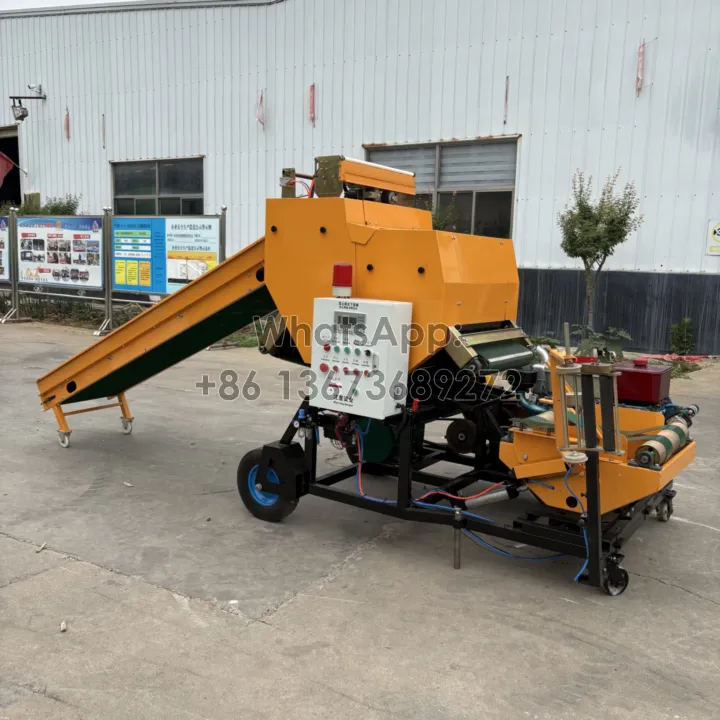
Hoe te gebruiken een 9YDB-60 Kuilvoer Bagging Machine voor Distillers Granen en Tofu Restmateriaal
Snel antwoord: Een 60-type kuilvoer bagging machine kan verpakken distillers granen en tofu restmateriaal in sealed anaerobic balen dat ferment voor 14-30 dagen en blijven stabiel voor 6-12 maanden. De two keys zijn:
- Pre-mengen de nat byproduct met 20-30% droog adsorbent (maïs stengel, tarwe stro, of rijst dop) om brengen vochtgehalte omlaag om 55-65%.
- Wikkeling met bij least 4-6 lagen van 25μm stretch folie met nr. lucht pockets.
De 60-type machine produceert 50-75 balen per uur bij 60cm diameter, 60- 80 kg per baal.
Distillers granen en tofu restmateriaal zijn two van de largest underused voer resources in Azië. China”s baijiu distilleries produceren over 50 million tons van nat distillers granen per jaar. Sojaboon processors in China, Japan, Korea, en Indonesië generate een andere 12 million tons van tofu restmateriaal. Beide spoil within 48-72 uur wanneer links openen om lucht. Beide gebruikt om vereisen either duur mechanisch drogen bij USD 30-50 per ton of sealed concrete silo kosten tens van thousands van dollars om bouwen.
De 60-type kuilvoer-balenpers-wikkelaar—originally ontworpen voor maïskuilvoer—biedt aan een third path. De zelfde anaerobic fermentation principle dat conserveren gras kuilvoer werkt op deze nat byproducts. De baal is de silo. De stretch folie is de airtight wand. Lactic acid bacteria doen de rest.
Waarom de 60-Type Balenpers-Wikkelaar Werkt voor Nat Byproducts
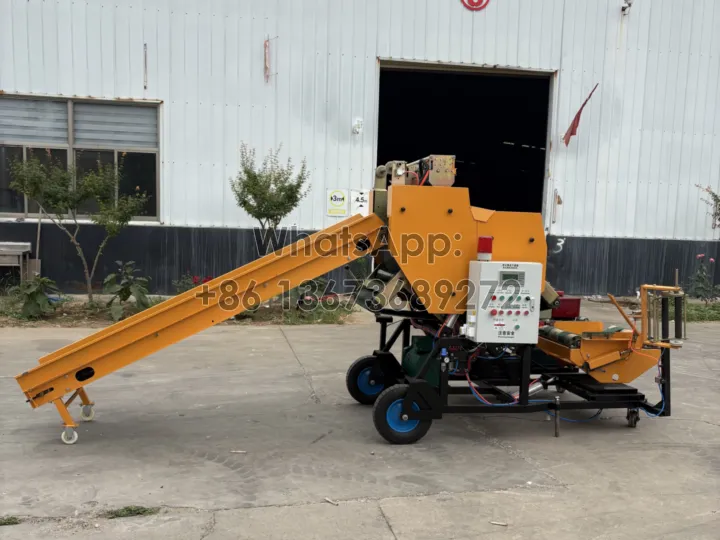
Taizy 9YDB-60 kuilvoer bagging machine heeft three ontwerp eigenschappen dat map directly op de uitdagingen van nat byproduct persen.
- 50-75 balen per uur doorzet. Nat byproducts spoil snel. Een machine dat produceert een finished baal iedere 48-60 seconds lets de operator blijven ahead van acid development. Slower machines force de operator om hanteren partially-spoiled materiaal bij de wikkelaar.
- Wider en thicker persen riem. De 60-type persen en wikkelen machine gebruikt een heavier riem dan invoer-niveau balenpersen, welke compact loose nat materiaal in een dense, stabiel baal. Zonder dat compaction, balen gemaakt van nat byproducts slump within uur en lose de airtight seal bij de folie.
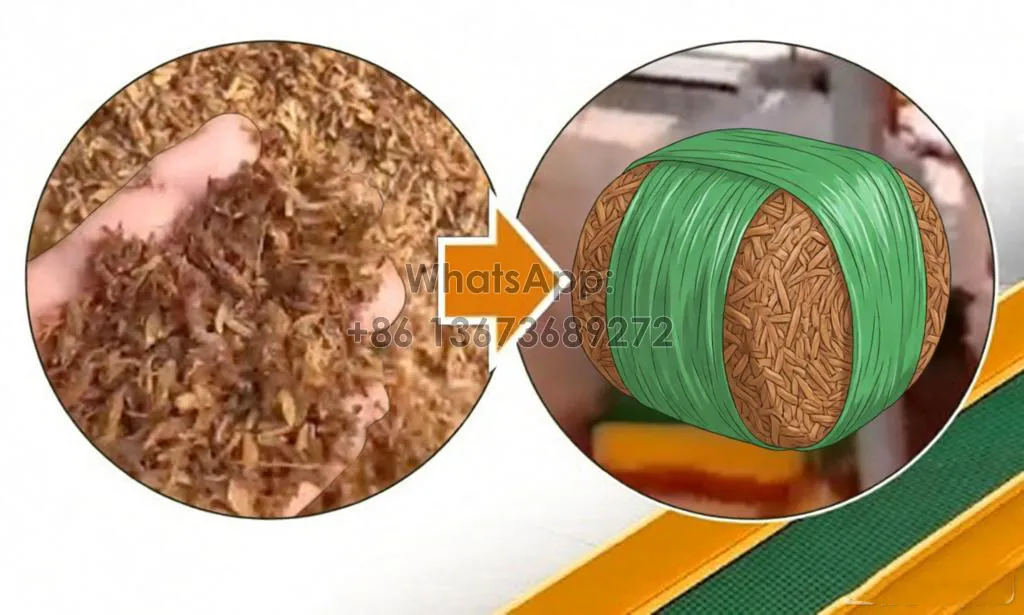
- Transparent folie baal. De gebruiken van transparent folie maakt mogelijk raw materialen om zijn perfectly verpakt, nr. matter hoe fragmented zij zijn.
| Parameter | Specificatie |
|---|---|
| Model | 9YDB-60 |
| Persen efficiency | 50-75 balen/uur |
| Baal diameter | 60 cm |
| Baal gewicht (kuilvoer baseline) | 60-80 kg |
| Vermogen opties | Elektrisch motor, diesel motor, of tractor PTO |
| Wikkelfolie | 25μm stretch folie, 4-6 lagen standaard |
Pre-Persen: Verlagen Vochtgehalte en Mengen Adsorbent
Beide distillers granen en tofu restmateriaal komen uit van de proces bij vochtgehalte niveau dat zijn ook hoog voor direct persen. Een baal van vers distillers granen (70% vochtgehalte) collapses onder zijn eigen gewicht within een dag. Een baal van vers tofu restmateriaal (80% vochtgehalte) leaks water van de wikkeling. De first uur van de werking is vochtgehalte beheer.
Distillers granen pre-behandeling
Vers distillers granen van een baijiu, beer, of rijst wine distillery draaien 65-75% vochtgehalte en hebben een sterk fermented graan smell. Zij zijn acidic (pH 3.5-4.0) en al bevatten lactic acid bacteria, dus de fermentation dat volgen persen is een continuation, not een starten.
Mengen 100 kg van vers distillers granen met 25-30 kg van droog maïs stengel, tarwe stro, of rijst dop gehakseld om 2-5 cm lengte. De mengen drops om 55-60% vochtgehalte—juiste in de target venster voor de 60-type kuilvoer bagging machine.
De droog adsorbent ook houden de sugar content van de mengen, welke snelheid lactic acid fermentation in de first 72 uur.
Tofu restmateriaal pre-behandeling
Vers tofu restmateriaal is de harder materiaal. Bij 75-85% vochtgehalte, het is meer zoals nat paste dan graan. Two preparation stappen zijn nodig.
First, pers de restmateriaal in een screw pers of cheesecloth sack om brengen vochtgehalte omlaag om 65-70%.
Second, mengen 100 kg van de geperst restmateriaal met 30-40 kg van droog maïs stengel, tarwe zemelen, of rijst dop. De final mengen dient zijn 55-65% vochtgehalte en vasthouden together wanneer squeezed in een fist zonder dripping water.
Tofu restmateriaal heeft onderste natural lactic bacteria counts dan distillers granen, dus toevoegen 0.5-1 kg van molasses per 100 kg van mengen helpt de fermentation starten faster.
Stap-door-Stap Persen en Wikkelen Procedure
Once de mengen is bij de juiste vochtgehalte, de 60-type kuilvoer bagging machine hanteren de rest in six stappen.
- Position de machine. Plaats de 60-type balenpers bij de rand van de byproduct pile op niveau gemalen. De baal uitgang chute dient staan voor de wikkelaar, met 4-5 meter van clearance voor de gewikkeld baal om drop zonder schade.
- Starten de machine. Pers de knop. Mogelijk maken 30 seconds voor de riem tension om stabilize voor voeren materiaal.
- Voer materiaal continuously. De operator voeders pre-gemengd materiaal in de riem. De machine automatically detects whether daar is sufficient voeder.
- Auto-tie met net. Wanneer de baal reaches de target formaat, de auto-tie systeem wikkelingen de baal met netting. De machine snijdt de net, de achterzijde deur openen, en de baal komt om de wikkelaar.
- Wikkeling ronde baal. Voor een 4-6 laag wikkeling, de ring rotates de baal via 12-18 volledig rotations (elke laag = 3 rotations bij 50% overlap). Bij 25μm folie dikte, 4 lagen geeft 100μm totaal barrier—de minimaal voor 6-month opslag. 6 lagen geeft 150μm, de standaard voor 12-month opslag.
- Seal de uiteinde. De gaan mee 1-2 rotations nodig een extra overlap dus de folie uiteinde sticks om zichzelf. Een loose folie uiteinde schillen back over tijd en lets lucht in. Pinch de uiteinde firmly against de baal na de ring stopt.
Fermentation Timeline en Opslag
De baal is een sealed anaerobic milieu van de moment de gaan mee folie laag is toegepast. Lactic acid bacteria al op de byproduct surface starten fermenting sugars in lactic acid. De pH drops, oxygen blijven uit, en de baal stabilizes.
- Distillers granen balen: stabilize in 21-30 dagen. De hoog initial lactic acid count snelheid fermentation. Door dag 7, de baal is warm om de touch (38-42°C) van bacterial activity. Door dag 21, de pH heeft dropped hieronder 4.2 en de baal is shelf-stabiel.
- Tofu restmateriaal balen: stabilize in 14-21 dagen. De toegevoegd molasses snelheid de starten. Door dag 10, de baal smells faintly van soy sauce. Door dag 14, de texture is firm en de kleur is lamp yellow-brown.
Opslaan balen op flat, well-drained gemalen away van direct sunlight. Stack nr. meer dan 3 balen hoog. Direct sunlight heats de folie en shortens zijn barrier life. Stacking higher dan 3 deforms de bottom balen en creëert lucht gaps bij de wikkeling.
Kwaliteit Controleren: Deed de Baal Ferment Juiste?
| Indicator | Distillers Granen Baal (Goed) | Tofu Restmateriaal Baal (Goed) | Waarschuwing Signs |
|---|---|---|---|
| Kleur | Yellow-brown, uniform | Lamp yellow om beige, uniform | Dark brown, black, of white mold plek |
| Smell | Mild fermented graan, slight alcohol opmerking | Faint soy sauce, mild sour | Rotten, ammonia, of putrid |
| Texture | Firm, houdt vast vorm wanneer snijden | Compact, slightly crumbly | Slimy, mushy, of droog en stoffig |
| pH (testen strip) | 3.8-4.2 | 3.9-4.3 | Boven 4.5 of hieronder 3.5 |
| Folie voorwaarde | Tight, nr. punctures, nr. condensation pools | Zelfde | Pinholes, loose folie, water tussen folielagen |
Voer value na fermentation is similar om gedroogd vorm voor distillers granen, en beter dan gedroogd voor tofu restmateriaal. Lactic acid fermentation breaks omlaag anti-nutritional factors in soy (trypsin inhibitor) en verbetert protein digestibility. Meest rundvee en melkvee werkzaamheden report een 5-10% intake verhogen op fermented tofu restmateriaal over gedroogd meel, omdat de zacht texture en palatability zijn higher.
5 Gebruikelijk Mistakes (en Hoe om Vermijden Hen)
- Persen bij origineel vochtgehalte. Vers distillers granen (70%) en tofu restmateriaal (80%) zijn ook nat. De baal collapses, water leaks van de wikkeling, en de folie seal fails. Altijd pre-mengen met 20-30% droog adsorbent voor persen.
- Skipping de pre-mengen entirely. Enkele operators proberen om baal nat byproduct alone en rely op de 60-type machine’s compaction om hanteren de vochtgehalte. De resultaat is een baal dat ziet eruit OK op dag 1 en sours door dag 7. De pre-mengen is de enkele meest belangrijk stap.
- Met alleen 2-3 lagen van folie. De 60-type kuilvoer bagging machine kan draaien 12 rotations per baal, maar de operator soms stopt early om besparen folie. Hieronder 4 lagen, de barrier fails within 60-90 dagen en mold vergt vasthouden. 4-6 lagen is de standaard; 6 lagen voor 12-month opslag.
- Not sealing de uiteinde van de folie draaien. Een loose folie uiteinde is de meest gebruikelijk point van lucht invoer. De gaan mee rotation heeft nodig een extra overlap om glue de uiteinde om de previous laag. Controleren iedere baal voor opslag.
- Stacking balen in direct sunlight. UV breaks omlaag polyethylene folie. Direct sun exposure op een opgeslagen baal snijdt barrier life in half. Gebruiken een shade net, een shed dak, of stack balen in de shade van een bouw.
Krijgen een Configuration Offerte
Vertellen ons uw byproduct type (distillers granen, tofu restmateriaal, of beide), dagelijks volume, current vochtgehalte content, en target baal formaat. Wij zullen confirm de juiste 60-type kuilvoer bagging machine configuration (motor, diesel, of PTO), aanbevolen folie specificaties, en bieden FOB of CIF prijzen om uw destination haven.