Zuid-Afrika Melkvee Werking Koopt T60 Dubbele-Folie Balenpers Wikkelaar voor Lucerne en Maïs Kuilvoer
Een exciting piece van nieuws om delen! Een commercieel melkvee en beef werking in de Zuid-Afrikaans Vrijstaat bestelde een T60 dubbele-folie balenpers wikkelaar om consolidate zijn kuilvoer workflow. De T60 produceert een Φ550×550 mm baal weighing 80-120 kg, draait bij 60-85 balen/uur op een 7.5 kW 6-pole motor, en weighs 1,242 kg in een 4,950×1,500×1,950 mm footprint.
De klant vervangen een scheiden fixed-chamber balenpers en een scheiden wikkelaar met de enkele T60, snijden labor van three operators om een en verlagend folie gebruiken door about 12% dank om de geïntegreerd dubbele-folie wikkelen.
Deze praktijkgeval is worth lezen als u draaien een mid-formaat melkvee of beef werking in een semi-arid regio, evaluate geïntegreerd balenpers-wikkelaars against scheiden machines, of balance lucerne en maïs kuilvoer in de zelfde workflow.
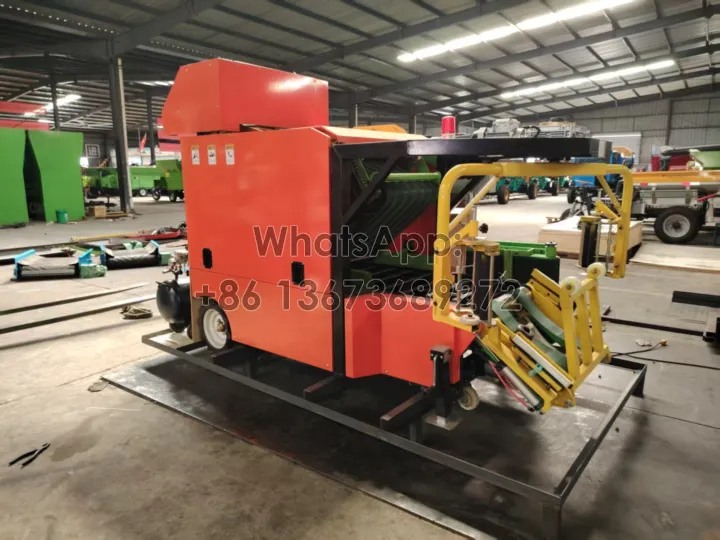
Klant Background: Een Vrijstaat Melkvee en Beef Werking
De klant draait een 480-head Holstein melkvee en een 600-head beef feedlot near Bethlehem in de Vrijstaat province van Zuid-Afrika, bij roughly 1,650 m elevation. De bedrijf teelt 220 hectares van irrigated lucerne (alfalfa) en 180 hectares van dryland yellow maïs voor kuilvoer, producerend around 5,500-6,500 tonnes per jaar.
De previous workflow gebruikt een fixed-chamber round balenpers voeren in een stand-alone wikkelaar, vereisend three operators (balenpers, telehandler, wikkelaar) en producerend 35-40 gewikkeld balen per uur. De kritisch probleem was de 30-90 minuut gap tussen persen en wikkelen in summer, welke was kosten measurable droog matter en aerobic spoilage bij de baal surface.
Waarom de T60 Dubbele-Folie Balenpers Wikkelaar
De T60 was gekozen voor three redenen, alle tied om de zelfde doel: shrink de tijd tussen hakselen en sealing de baal.
- Een machine, een operator, zero gap tussen persen en wikkelen. De T60 vorm de baal en wikkelingen het in de zelfde chassis. De baal nooit bladeren de machine until het is fully gewikkeld en ready voor de opslag stack. Met de oud setup, surface spoilage bij de 30-90 minuut interface was kosten 4-6% van droog matter per baal. Met de T60, dat gap is gone.
- Dubbele-folie wikkelen. De T60 carries two folie rollen en lays hen op de baal simultaneously, welke is faster en produceert een tighter oxygen barrier dan enkele-folie wikkeling. In de klant’s testen, dubbele folie verlaagd de aantal van torn of punctured balen tijdens transporteren en stacking door roughly een third.
- Φ550×550 mm baal, de juiste formaat voor de werking’s voeren en resale channels. De 80-120 kg baal gewicht is lamp enough voor een medewerker om hanteren met een spike voor de bedrijf’s smaller paddocks, en klein enough om passen via de klant’s existing baal-opslag shed deur (1.8 m breed). Larger 1.2 m diameter balen zou hebben vereist een telehandler iedere tijd en een wider shed deur.
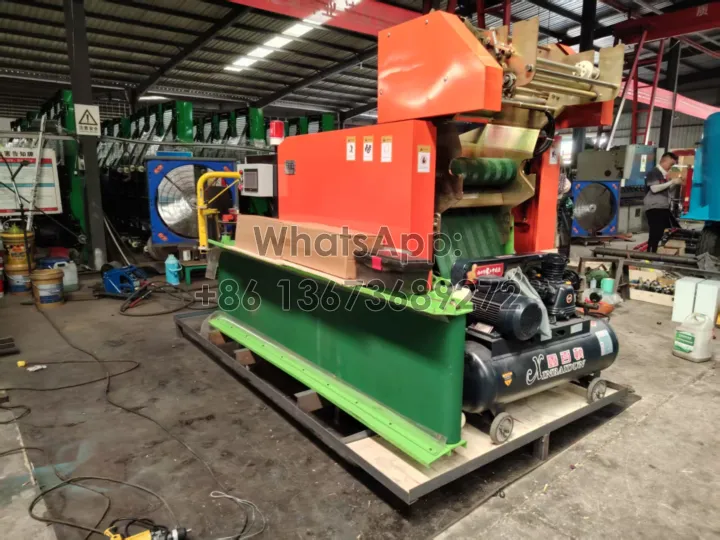
Balenpers Wikkelaar Machine Specificaties
| Parameter | Specificatie |
|---|---|
| Model | Taizy T60 Dubbele-Folie Balenpers-Wikkelaar |
| Baal formaat (diameter × breedte) | Φ550 × 550 mm |
| Gewicht van de baal | 80-120 kg per baal (gewas en vochtgehalte dependent) |
| Capaciteit | 60-85 balen/uur |
| Matchende kracht | 7.5 kW 6-pole elektrisch motor |
| Footprint (L × W × H) | 4,950 × 1,500 × 1,950 mm |
| Netto gewicht | 1,242 kg |
| Voeding | 3-phase 380V / 50Hz (met transformer voor 525V Zuid-Afrikaans locatie op aanvraag) |
| Wikkelen systeem | Dual-folie stretch wikkelaar, 4-6 laag overlap verstelbaar |
| Folie breedte | 250 mm × 2 rollen |
| Operator eis | 1 operator + 1 telehandler voor stacking |
| Opbrengst | Lucerne kuilvoer, maïs kuilvoer, haver kuilvoer, sorghum kuilvoer |
Zuid-Afrikaans bedrijven typically draaien op 525V three-fase bij 50Hz, not de 380V standaard op meest Chinees-gebouwd apparatuur. Taizy leverde een stap-op transformer (525V → 380V) met de zending, sized om hanteren de T60’s 7.5 kW draw met een 30% headroom voor motor starten surges. De transformer is housed in een scheiden IP54 cabinet geïnstalleerd next om de machine shed.
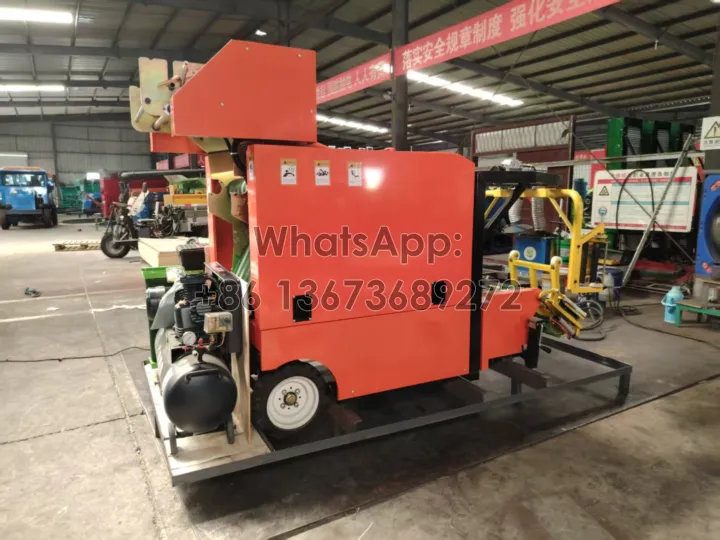
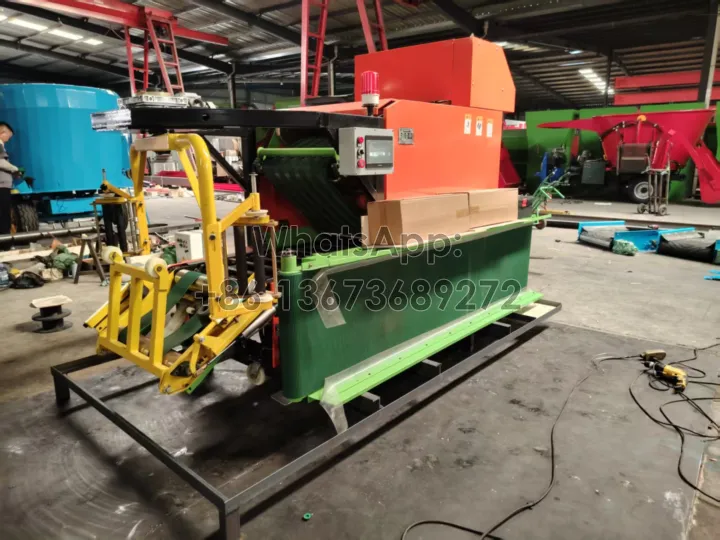
Two Gewassen, Een Workflow: Lucerne en Maïs Kuilvoer
De T60 balenpers wikkelaar draait two distinct kuilvoer programs over de jaar. De setup wijzigingen tussen hen vergen about 20 minuten: folie tension, pre-snijden selectie op de pickup, en baal dichtheid druk.
| Instelling | Lucerne kuilvoer (Oct-Apr) | Yellow maïs kuilvoer (Feb-Mar) |
|---|---|---|
| Pre-snijden lengte | Kort (12-18 mm) | Lang (25-35 mm) |
| Target vochtgehalte bij persen | 55-62% | 62-70% |
| Baaldichtheid | Middelgroot (onderste druk) | Hoog (volledig druk) |
| Folielagen | 4 lagen (stabiel balen, snel verbruik) | 6 lagen (lang-term opslag, 12+ maanden) |
| Doorzet | 70-85 balen/h (lighter gewas) | 60-70 balen/h (denser, heavier balen) |
| Gemiddeld baal gewicht | 85-95 kg | 100-120 kg |
Lucerne bij 60% vochtgehalte en kort pre-snijden is de easier draaien—lamp, fluffy balen komen uit de T60 bij de top van zijn bereik. Maïs bij 65-70% vochtgehalte met longer pre-snijden is heavier en slower. De T60’s variable baal chamber druk is de meest-gebruikt bediening over de jaar, en de dual-folie wikkeling is de zelfde in beide programs.
Echt-Wereld Prestaties in de First Seizoen
De T60 was commissioned in late October 2025 in tijd voor de first lucerne snijden van de seizoen. Aantallen van de first 90 dagen van werking zijn hieronder.
- Balen geproduceerd: 6,840 balen in 90 dagen, van welke 4,520 waren lucerne en 2,320 waren maïs.
- Gemiddeld hourly doorzet: 72 balen/h over beide gewassen, peaking bij 84 balen/h op een schoon, droog lucerne snijden en bottoming bij 58 balen/h op een nat maïs draaien na lamp rain.
- Folie verbruik: 4.3 rollen per 100 balen op lucerne, 5.8 rollen per 100 balen op maïs (omdat van de 6-layer wikkeling). Beide aantallen zijn within Taizy’s verwacht bereik.
- Baal kwaliteit na 60 dagen van opslag: 1.8% van balen toonde surface mold op openen. De klant’s oud proces draaide 5-7% spoilage bij de zelfde 60-day markt.
- Labor: Omlaag van 3 operators om 1 operator + 1 telehandler bestuurder. De telehandler was al in gebruiken voor bunker silo verpakking, dus zijn marginal kosten was zero.
- Downtime: Een riem vervanging en een folie-rol holder afstelling in 90 dagen. Totaal unplanned downtime: 4 uur over 6,840 balen.
De klant deed de math voor de artikel: 6,840 balen × 4% droog matter verbetering × gemiddeld 95 kg per baal × ZAR 3,500/tonne kuilvoer value = roughly ZAR 91,000 in droog-matter besparing in de first 90 dagen alone, voor counting labor.
Levering, Installatie, en First-Snijden Commissioning
- Bestelling placed: Q3 2025, een T60 met 525V stap-op transformer, reserve riem set, reserve folie rol holder, en een 1,000-roll initial folie bestelling.
- Productie completed: 12 werking dagen na deposit confirmation.
- Verzending route: Qingdao → Haven van Durban door FCL zeevracht, 28 dagen van deur tot haven, plus 12 dagen voor Zuid-Afrikaans Omzet Service (SARS) douaneafhandeling, havenafhandeling, en 300 km binnenlands wegtransport om Bethlehem in de Vrijstaat.
- Installatie: 1 dag voor offloading en placement in de existing machine shed, 1 dag voor de electrical contractor om wire de 525V transformer en draaien een 16 mm² three-fase cable om de T60’s junction kist, half een dag voor commissioning en operator training.
- First commercieel draaien: Dag 4 na aankomst, 78 lucerne balen in de first 90-minute shift.
Taizy geboden een video commissioning bellen via WhatsApp en een printed Engels-taal operator handleiding. De klant’s existing balenpers operator gelezen de T60 kuilvoer-balenpers met wikkelaar’s chamber druk en folie-overlap bediening in een enkele ochtend. Nr. service engineer traveled om de locatie.
Klant Outcome Na Een Seizoen
Na een volledig lucerne seizoen en de maïs hakselen venster, de klant summarizes de T60 persen en wikkelen machine decision als volgen.
- Kuilvoer kwaliteit: De T60 balen tonen minder surface spoilage en onderste fermentation verlies dan de oud proces. De 1.8% spoilage figure is de beste de klant heeft measured in een decade van maken geperst kuilvoer.
- Doorzet: 72 balen/h gemiddeld over two gewassen versus 35-40 balen/h met de oud two-machine setup. De klant produceert 80% meer gewikkeld balen per shift met een minder operator.
- Folie gebruiken: De dual-folie wikkeling gebruikt about 8-10% meer folie per baal dan de oud enkele-folie wikkelaar, maar de verlaagd spoilage meer dan pays voor de extra folie.
- Resale channel: De klant is nu verkopend gewikkeld balen om three neighboring bedrijven bij ZAR 280-320 per baal, recovering de T60 aankoop kosten op resale volume alone within roughly 18-24 maanden.
- Klant feedback (translated van Afrikaans): “De T60 is de first machine wij hebben gekocht waar de besparing toonde op in de first maand. De oud setup was three mannen en two machines. Nu het is een man en een machine, en de balen zijn beter. Wij dient hebben uitgevoerd deze jaar ago.”
De klant is nu evaluating Taizy’s 60-Type en 70-Type balenpers-wikkelaars voor een satellite werking 90 km north, en een maïsschiller om hanteren de graan zijde van de oogst voor de feedlot mengen.
Is de T60 de Juiste Balenpers Wikkelaar voor Uw Werking?
Als u draaien een melkvee, beef, of contract persen werking en zijn evaluating geïntegreerd balenpers-wikkelaars, delen uw target jaarlijks baal volume, uw belangrijkste gewassen, uw baal formaat preference, en uw locatie’s voltage. Taizy’s engineering team zal retourneren een configuration offerte met verzending route, folie aanbeveling, en een transformer spec within 3 werking dagen.