Completa Linha de processamento de silagem: De Enfardamento para Alimentação em Explorações Modernas
Em uma 200-vaca leiteira em explorações modernas, o gestor da exploração reduziu a mão de obra diária de alimentação de 9 horas para 3.5 ao integrar quatro máquinas para um linha de processamento de silagem:
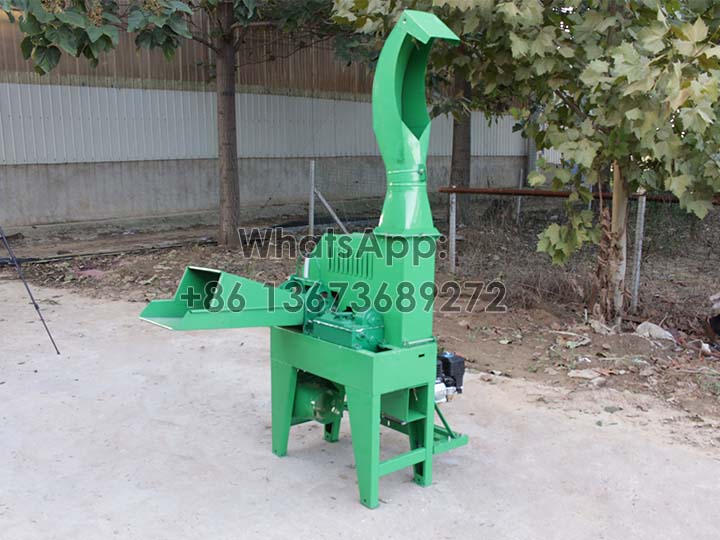
- Triturador de forragem
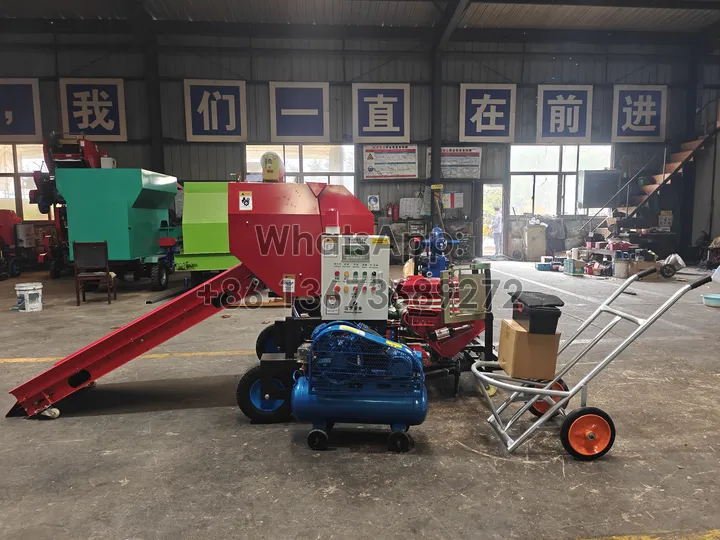
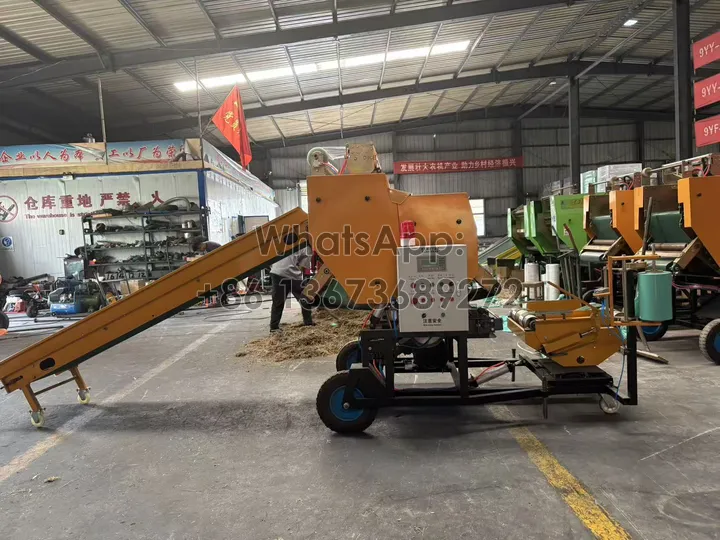
- Enfardadeira e embaladora de silagem
- vagão misturador TMR
- Triciclo distribuidora de ração
O retorno foi não o equipamento em si—foi o fluxo de trabalho. Não mais manuseamento duplo. Sem silagem acumulada em pilhas abertas overnight. Mesma ração qualidade em cada parque.
uma completa silagem máquina linha é não um shopping lista. É um encerrar loop de o campo para a manjedoura, com não transferir manual em entre. Aqui é como o cinco etapas adequar-se em conjunto, e como para calibrar os.
Etapa 1: Forragem Colher e Pre-Cut
Milho, sorgo, luzerna, ou erva vem em em 60-75% humidade. Dois máquinas abranger a maioria de explorações:
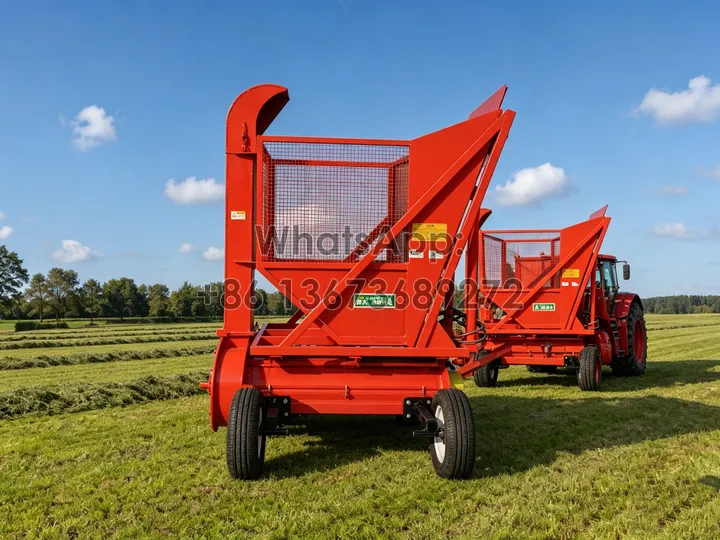
- Autopropulsionada colhedora de forragem — para 100+ vaca operações puxar 5+ toneladas por hora em campos múltiplos.
- Triturador de forragem/picadora de forragem — para 20-100 vaca explorações corte em o estábulo. Produção opera 400 kg/h (elétrico) para 4 t/h (diesel).
Aponte para um 2-3 cm picar em milho silagem, 4-6 cm em erva e luzerna. Anything mais longa hurts embalagem densidade posteriormente e lentas fermentação.
Etapa 2: Silagem Enfardamento e Embalagem (Opcionais, mas Valor Ele)
Para fazendas que armazenar silagem em fardos rather do que silo trincheira, a enfardadeira e enfardadeira de silagem é o workhorse. Taizy’s TZ-55-52 turns out 50-85 fardos redondos por hora (Φ55×52 cm, 65-500 kg por fardo). Wrapped fardos manter para 12-24 meses com under 15% seco matter perda.
Evite esta etapa apenas se você já opera um selado silo trincheira silo e pretender para ração reta para a misturadora TMR. Para a maioria de Africano, Médio Eastern, e Sudeste Asiático explorações sem silo trincheira infrastructure, fardos são o prático escolha.
Etapa 3: Armazenagem e Fermentação
Enrolado fardos precisar 6-8 semanas de anaeróbia fermentação antes de você abra os. Empilhe em um elevada gravilha base—direta solo contato causa inferior deterioração dentro de 3-4 semanas. Abra o enfardar 24-48 horas antes de mistura para permitir qualquer acumulado butírico ácido libertar gases.
Etapa 4: TMR Mistura
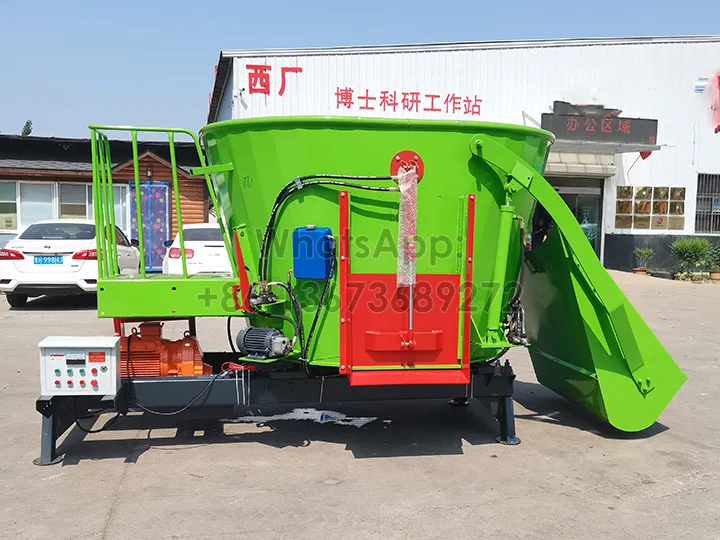
O misturadora TMR de ração reboque é onde ração accuracy lives. O vertical ração misturador (5-12 m³) processa todo fardos e fibra longa melhor. O horizontal silagem ração misturador é faster em pre-picada silagem but cannot tear abrir a fardo.
um rápido dimensionamento regra: 1 m³ de misturadora depósito mantém aproximadamente 200-250 kg de TMR misturado. Em uma 100-vaca leiteira alimentação 25 kg por vaca por dia, essa funciona fora para uma 12-15 m³ misturadora para terminar um lote por ordenha turno.
Etapa 5: Alimentação e Distribuição
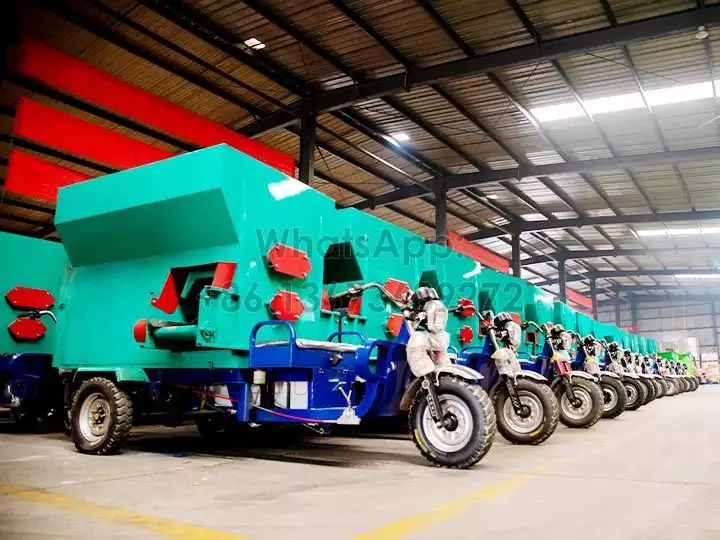
O passado link é o espalhador de silagem—a tricycle-mounted caçamba que drops mixed ração ao longo do alley. Bidirectional descarga (padrão no Taizy TZ-3 e TZ-5) lets um operador ração ambos lados da 3m alley sem reversing. Vazão opera 1.5-2.5 toneladas por fill cycle.
Dimensionamento por Tamanho do rebanho
| Tamanho do rebanho | Picadora de forragem | Silagem Enfardadeira Redonda | Misturadora de ração | Silagem Spreader |
| 20-50 vacas | 1 t/h elétrica | TZ-55-52 (opcional) | 3-5 m³ | TZ-3 elétrico 3 m³ |
| 50-150 vacas | 2-3 t/h diesel | TZ-55-52 ou 9YDB-60 | 5-9 m³ | TZ-5 diesel 5 m³ |
| 150-500 vacas | 4-6 t/h autopropulsionada | 9YDB-70 ou 90 | 12-20 m³ | TZ-5 diesel 5 m³ × 2 |
3 Erros comuns de disposição de Linha de processamento de silagem
- Mismatched capacidade. uma 4 t/h picadora alimentação uma 2 t/h enfardadeira enroladora cria uma estrangulamento. Mantenha upstream capacidade dentro de 20% de a jusante.
- Longo transferir caminhos. Cada extra 10m entre a misturadora e o corredor de alimentação adiciona cerca de 5 minutos por carregar. Mantenha a misturadora dentro de 30m de o maior parque.
- Não reserva alimentar. Misturadoras elétricas e distribuidoras parar a moment a rede elétrica deixa cair. A 10-15 kVA diesel gerador abrange 80% de médio porte exploração precisa.
perguntas frequentes de Forragem Linha de processamento de silagem
Preciso todas 5 etapas para uma pequena exploração?
Não. Em 20-50 vaca explorações, skip a enfardadeira de silagem e ração reta de a picadora para um combinado mixer-spreader triciclo. A completo 5-etapa linha inicia para pagar seca acima de 100 vacas.
Posso adicionar etapas depois à medida que o meu rebanho cresce?
Sim. A maioria de explorações iniciar com uma picadora e distribuidora, adicionar uma misturadora TMR cerca de 50 vacas, e traz em uma forragem enfardadeira em 100+ vacas uma vez silo trincheira armazenagem para sendo prático. Taizy máquinas são construído para incremental expansão.
Qual é o prazo de retorno do ROI para uma linha completa?
Com 3-5 menos trabalhadores por turno e 15-20% menos desperdício de ração do que pilha aberta silagem, a maioria de explorações recuperam o investimento total em equipamento em 14-22 meses. O Médio Oriente regista o mais rápido retorno; regiões com económico manual mão de obra ver o mais lento.
Planeie a sua linha de processamento de silagem personalizada
Envie-nos sua tamanho do rebanho, energia disponível, diária ração, e objetivo capacidade. Vamos corrente uma disposição com máquina especificações, contentor carregamento planear, e custo total. Você pode entre em contato conosco em qualquer tempo para detalhes!