Taizy农业机械 / 为了农民,为了农业,为了更好的生活

5 Practical Benefits of Automated Feed Spreading for Livestock Operations

Across 200+ Taizy silage spreader installations since 2022, the farms that automate feed distribution report five consistent benefits. None of them are theoretical. They are the numbers our customers track month over month:

  • Labor hours per shift
  • Feed waste in the bunk
  • Dry matter intake per cow
  • Animal aggression at feeding time
  • Operator injury incidents

This article breaks down each benefit of automated feed spreading with the actual range we’ve measured.

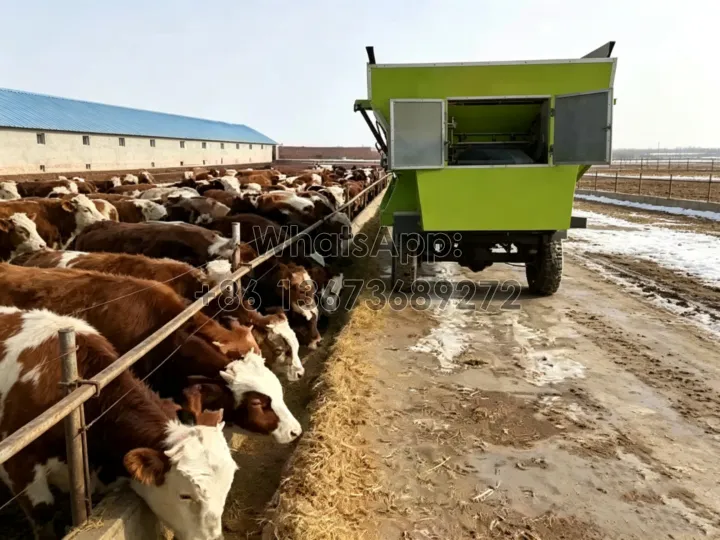
automated feed spreading

Benefit 1: Labor Reduction of 1-2 Workers per Shift

Manual feed distribution on a 100-cow dairy takes 2-3 workers 90-120 minutes per meal, twice daily. That’s 6-12 worker-hours per day just for spreading.

An automated silage spreader cuts this to 1 operator for 35-50 minutes per meal.

The 4-8 hours saved daily translates to either direct payroll reduction or—more commonly on family farms—freeing labor for higher-value tasks like herd health checks, calf feeding, or pasture management.

At a labor cost of USD 150-300/month per worker, the annual saving is USD 2,400-7,200. Against a silage feed spreading equipment investment of USD 3,000-6,500 for a tricycle spreader, the labor savings alone pay back the machine in 6-18 months.

Benefit 2: 5-8% Reduction in Feed Waste

Manual spreading with a wheelbarrow creates three waste sources:

  • Feed spilled in transit
  • Feed pushed off the bunk edge by uneven piling
  • Feed rejected by cows that can’t reach the central pile

Automated feed spreading lays a uniform 5- 8 cm layer along the entire bunk, so every cow has equal access and there’s no central pile to fight over or push off the edge.

On a 100-cow dairy feeding 25 kg TMR per cow per day at USD 250/tonne feed cost, a 6% waste reduction saves USD 4.50/cow/year, or USD 450/year for the herd. That figure alone is small, but combined with the labor savings, it pushes the payback under 12 months.

Benefit 3: More Uniform Dry Matter Intake

Cows are hierarchical. In a manual bunk with uneven feed piles, dominant cows eat first and get the highest-quality fraction. Subordinate cows get what’s left—often the longer fiber, lower in energy.

This intake variation shows up as 8-15% variation in milk yield between high-ranking and low-ranking cows in the same pen.

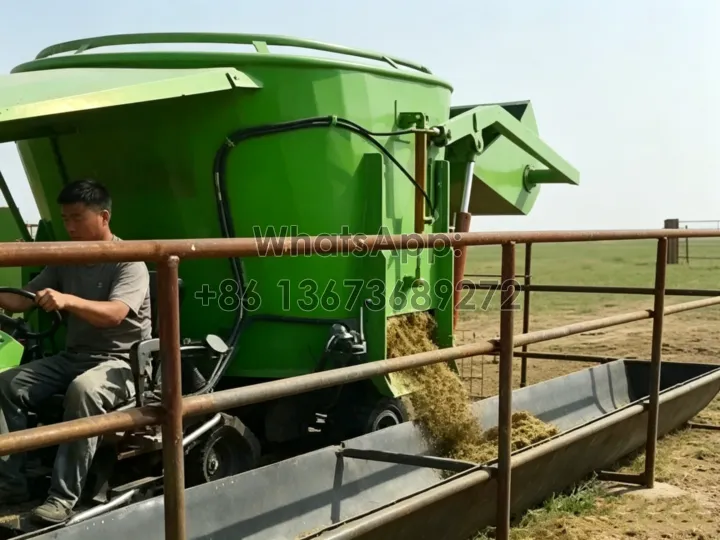
However, automated feed spreading delivers a uniform layer. Cows of all ranks eat side-by-side without competition. The result, measured at a 150-cow dairy in South Africa that switched to a TZ-5 diesel cattle feed spreader in 2023: a 6% increase in average daily milk yield and a 12% drop in the standard deviation between high and low producers in the same pen.

uniform silage feed distribution with spreader

Benefit 4: Reduced Aggression at Feeding Time

Manual spreading typically results in one or two large feed piles per pen. Cows crowd these piles, displacing each other and causing stress-related behaviors: bellowing, head-butting, and reduced feeding time for subordinate animals. Automated feed spreading distributes feed across the full bunk length, eliminating the crowding points.

Behavioral data from a 200-cow installation in Uzbekistan showed feeding-time aggression incidents dropped 70% within two weeks of switching to a TZ-5 feed spreader. The farmer reported a corresponding 4% increase in rumination time, which is a leading indicator of better feed conversion.

Benefit 5: Improved Operator Safety

Manual feed handling has the highest injury rate of any routine dairy task. The most common injuries are

  • Back strain from lifting
  • Finger lacerations from handling wire or sharp feed
  • Being kicked while working in close proximity to cows

An automated spreader removes the worker from the immediate cow zone during distribution.

Across our customer base, farms that automated feed distribution reported zero lost-time injuries from feeding tasks in the 12 months following installation, compared to an industry average of 1.2 lost-time injuries per farm per year for manual feeding operations. The hidden cost of even a single back injury (medical + lost workdays + replacement labor) often exceeds USD 1,500.

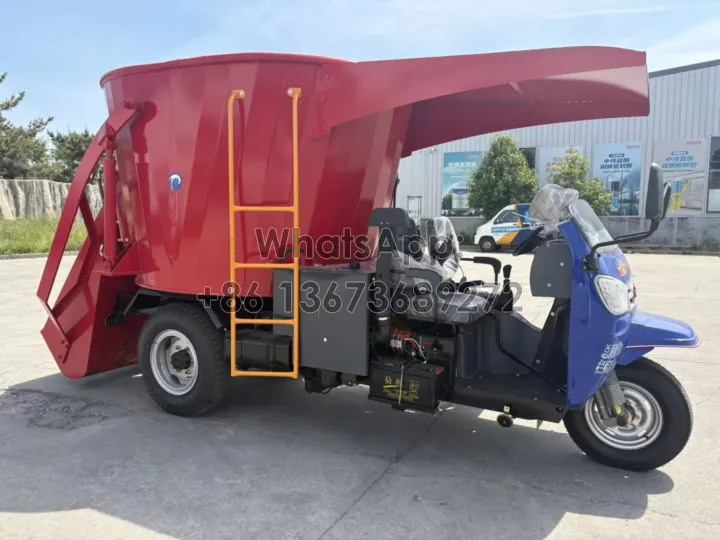
hot-selling diesel-engined cattle feed spreader

Cumulative ROI Snapshot

BenefitAnnual Value (100-cow farm)
Labor savingsUSD 2,400-7,200
Feed waste reductionUSD 400-900
Milk yield improvement (6% avg)USD 8,000-15,000
Injury avoidanceUSD 500-1,500 (probabilistic)
Aggression reduction (rumination gain)USD 800-1,500
Total annual benefitUSD 12,000-26,000
Annual benefit range from automated feed spreading

FAQs of Automated Feed Spreading

Is automated feed spreading only for large farms?

No. The smallest Taizy TZ-3 electric spreader at USD 2,500-3,500 pays back in 6-12 months even on a 30-cowfarm, mostly through labor savings. The threshold for “worth it” is around 20 cows with stable electricity or grid power.

How long does installation and operator training take?

For a tricycle spreader, installation is essentially “uncrate and charge (electric) or fuel (diesel).” Operator training takes 2-4 hours. Most farms are running the spreader in production within 24 hours of delivery

Can I retrofit an existing manual feeding system?

Yes. The spreader is downstream of any existing TMR mixer or manual batching process. Most retrofits require no infrastructure changes-only an electrical outlet or diesel fuel supply and a flat travel path from the mixing point to the feed alley.

Calculate Your Farm’s Specific ROI

Send us your herd size, current labor cost, daily ration, and feed cost. We’ll model the 5 benefit categories against your numbers and project a payback period.