Taizy农业机械 / 为了农民,为了农业,为了更好的生活

South Africa Dairy Operation Buys T60 Double-Film Baler Wrapper for Lucerne and Maize Silage

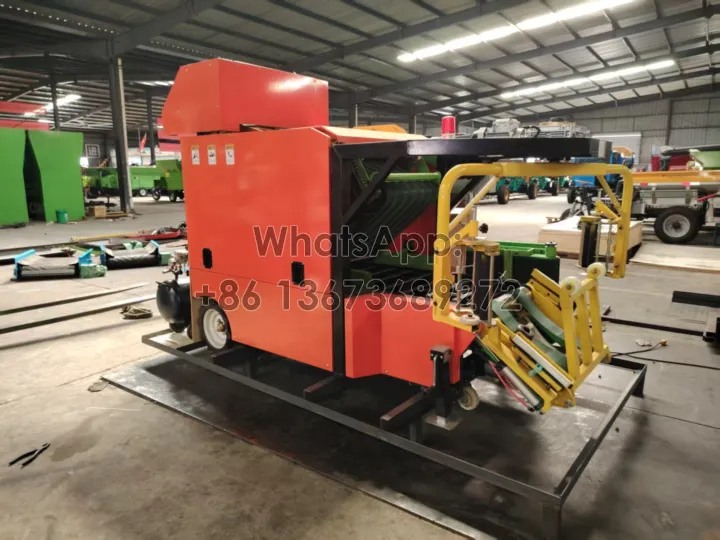
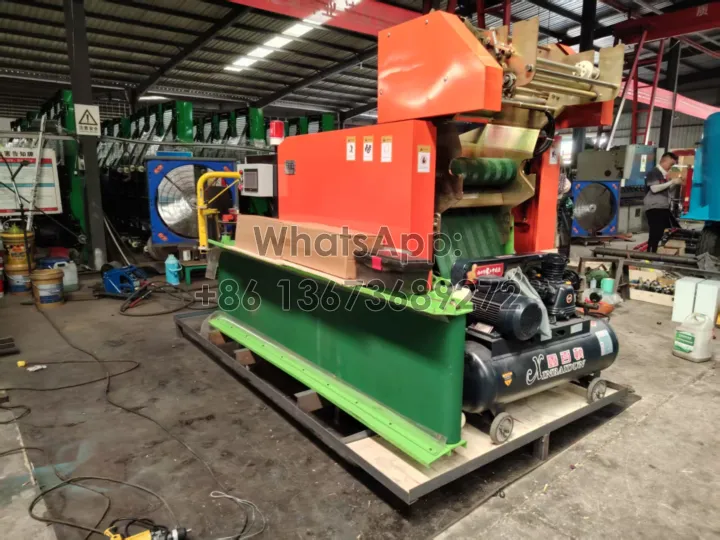
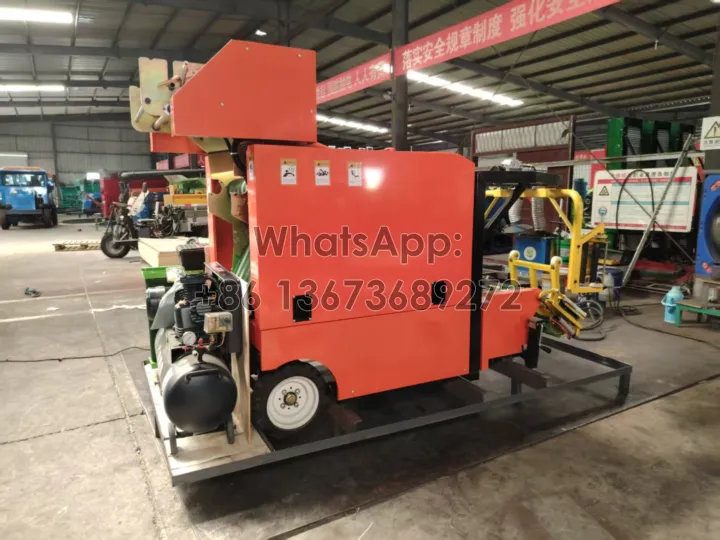
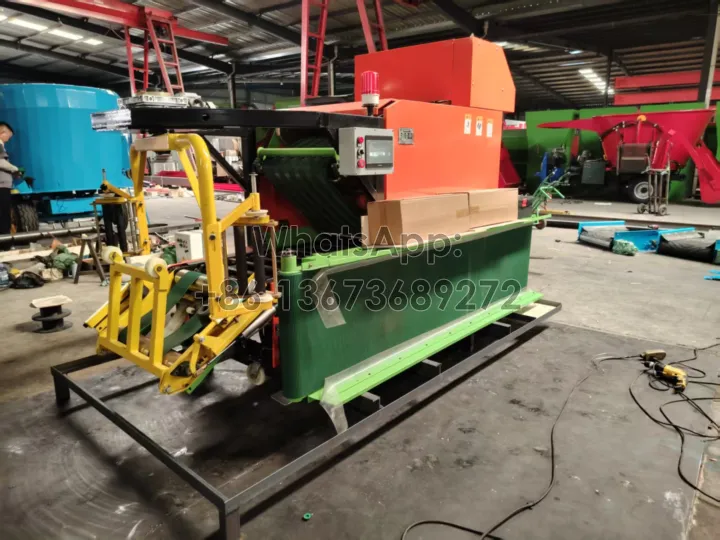
An exciting piece of news to share! A commercial dairy and beef operation in the South African Free State ordered one T60 double-film baler wrapper to consolidate its silage workflow. The T60 produces a Φ550×550 mm bale weighing 80-120 kg, runs at 60-85 bales/hour on a 7.5 kW 6-pole motor, and weighs 1,242 kg in a 4,950×1,500×1,950 mm footprint.

The customer replaced a separate fixed-chamber baler and a separate wrapper with the single T60, cutting labor from three operators to one and reducing film use by about 12% thanks to the integrated double-film wrapping.

This case is worth reading if you run a mid-size dairy or beef operation in a semi-arid region, evaluate integrated baler-wrappers against separate machines, or balance lucerne and maize silage in the same workflow.

double-film baler wrapper

Customer Background: A Free State Dairy and Beef Operation

The customer runs a 480-head Holstein dairy and a 600-head beef feedlot near Bethlehem in the Free State province of South Africa, at roughly 1,650 m elevation. The farm grows 220 hectares of irrigated lucerne (alfalfa) and 180 hectares of dryland yellow maize for silage, producing around 5,500-6,500 tonnes per year.

The previous workflow used a fixed-chamber round baler feeding into a stand-alone wrapper, requiring three operators (baler, telehandler, wrapper) and producing 35-40 wrapped bales per hour. The critical problem was the 30-90 minute gap between baling and wrapping in summer, which was costing measurable dry matter and aerobic spoilage at the bale surface.

Why the T60 Double-Film Baler Wrapper

The T60 was chosen for three reasons, all tied to the same goal: shrink the time between chopping and sealing the bale.

  • One machine, one operator, zero gap between baling and wrapping. The T60 forms the bale and wraps it in the same chassis. The bale never leaves the machine until it is fully wrapped and ready for the storage stack. With the old setup, surface spoilage at the 30-90 minute interface was costing 4-6% of dry matter per bale. With the T60, that gap is gone.
  • Double-film wrapping. The T60 carries two film rolls and lays them on the bale simultaneously, which is faster and produces a tighter oxygen barrier than single-film wrap. In the customer’s testing, double film reduced the number of torn or punctured bales during transport and stacking by roughly a third.
  • Φ550×550 mm bale, the right size for the operation’s feeding and resale channels. The 80-120 kg bale weight is light enough for one worker to handle with a spike for the farm’s smaller paddocks, and small enough to fit through the customer’s existing bale-storage shed door (1.8 m wide). Larger 1.2 m diameter bales would have required a telehandler every time and a wider shed door.
silage dual film bale wrapper for sale
silage dual-film bale wrapper for sale

Baler Wrapper Machine Specifications

范围规格
模型Taizy T60 Double-Film Baler-Wrapper
Bale size (diameter × width)Φ550 × 550 mm
捆包重量80-120 kg per bale (crop and moisture dependent)
容量60-85 bales/hour
匹配功率7.5 kW 6-pole electric motor
Footprint (L × W × H)4,950 × 1,500 × 1,950 mm
净重1,242 kg
电源3-phase 380V / 50Hz (with transformer for 525V South African sites on request)
Wrapping systemDual-film stretch wrapper, 4-6 layer overlap adjustable
Film width250 mm × 2 rolls
Operator requirement1 operator + 1 telehandler for stacking
OutputLucerne silage, maize silage, oat silage, sorghum silage
T60 spec sheet as shipped to the South African customer

South African farms typically run on 525V three-phase at 50Hz, not the 380V standard on most Chinese-built equipment. Taizy supplied a step-up transformer (525V → 380V) with the shipment, sized to handle the T60’s 7.5 kW draw with a 30% headroom for motor starting surges. The transformer is housed in a separate IP54 cabinet installed next to the machine shed.

Two Crops, One Workflow: Lucerne and Maize Silage

The T60 baler wrapper runs two distinct silage programs across the year. The setup changes between them take about 20 minutes: film tension, pre-cut selection on the pickup, and bale density pressure.

SettingLucerne silage (Oct-Apr)Yellow maize silage (Feb-Mar)
Pre-cut lengthShort (12-18 mm)Long (25-35 mm)
Target moisture at baling55-62%62-70%
草捆密度Medium (lower pressure)High (full pressure)
Film layers4 layers (stable bales, fast consumption)6 layers (long-term storage, 12+ months)
Throughput70-85 bales/h (lighter crop)60-70 bales/h (denser, heavier bales)
Average bale weight85-95 kg100-120 kg
Operating settings for the two main crops

Lucerne at 60% moisture and short pre-cut is the easier run—light, fluffy bales come off the T60 at the top of its range. Maize at 65-70% moisture with longer pre-cut is heavier and slower. The T60’s variable bale chamber pressure is the most-used control across the year, and the dual-film wrap is the same in both programs.

Real-World Performance in the First Season

The T60 was commissioned in late October 2025 in time for the first lucerne cut of the season. Numbers from the first 90 days of operation are below.

  • Bales produced: 6,840 bales in 90 days, of which 4,520 were lucerne and 2,320 were maize.
  • Average hourly throughput: 72 bales/h across both crops, peaking at 84 bales/h on a clean, dry lucerne cut and bottoming at 58 bales/h on a wet maize run after light rain.
  • Film consumption: 4.3 rolls per 100 bales on lucerne, 5.8 rolls per 100 bales on maize (because of the 6-layer wrap). Both numbers are within Taizy’s expected range.
  • Bale quality after 60 days of storage: 1.8% of bales showed surface mold on opening. The customer’s old process ran 5-7% spoilage at the same 60-day mark.
  • Labor: Down from 3 operators to 1 operator + 1 telehandler driver. The telehandler was already in use for bunker silo packing, so its marginal cost was zero.
  • Downtime: One belt replacement and one film-roll holder adjustment in 90 days. Total unplanned downtime: 4 hours across 6,840 bales.

The customer did the math for the article: 6,840 bales × 4% dry matter improvement × average 95 kg per bale × ZAR 3,500/tonne silage value = roughly ZAR 91,000 in dry-matter savings in the first 90 days alone, before counting labor.

Delivery, Installation, and First-Cut Commissioning

  • Order placed: Q3 2025, one T60 with 525V step-up transformer, spare belt set, spare film roll holder, and a 1,000-roll initial film order.
  • Production completed: 12 working days after deposit confirmation.
  • Shipping route: Qingdao → Port of Durban by FCL sea freight, 28 days door-to-port, plus 12 days for South African Revenue Service (SARS) customs clearance, port handling, and 300 km inland trucking to Bethlehem in the Free State.
  • Installation: 1 day for offloading and placement in the existing machine shed, 1 day for the electrical contractor to wire the 525V transformer and run a 16 mm² three-phase cable to the T60’s junction box, half a day for commissioning and operator training.
  • First commercial run: Day 4 after arrival, 78 lucerne bales in the first 90-minute shift.

Taizy provided a video commissioning call via WhatsApp and a printed English-language operator manual. The customer’s existing baler operator learned the T60 silage baler wrapper’s chamber pressure and film-overlap controls in a single morning. No service engineer traveled to the site.

delivery of double-film silage baling and wrapping machine

Customer Outcome After One Season

After one full lucerne season and the maize chopping window, the customer summarizes the T60 baling and wrapping machine decision as follows.

  • Silage quality: The T60 bales show less surface spoilage and lower fermentation loss than the old process. The 1.8% spoilage figure is the best the customer has measured in a decade of making baled silage.
  • Throughput: 72 bales/h average across two crops versus 35-40 bales/h with the old two-machine setup. The customer produces 80% more wrapped bales per shift with one fewer operator.
  • Film use: The dual-film wrap uses about 8-10% more film per bale than the old single-film wrapper, but the reduced spoilage more than pays for the extra film.
  • Resale channel: The customer is now selling wrapped bales to three neighboring farms at ZAR 280-320 per bale, recovering the T60 purchase cost on resale volume alone within roughly 18-24 months.
  • Customer feedback (translated from Afrikaans): “The T60 is the first machine we have bought where the savings showed up in the first month. The old setup was three men and two machines. Now it is one man and one machine, and the bales are better. We should have done this years ago.”

The customer is now evaluating Taizy’s 60-Type and 70-Type baler-wrappers for a satellite operation 90 km north, and a maize sheller to handle the grain side of the harvest for the feedlot mix.

Is the T60 the Right Baler Wrapper for Your Operation?

If you run a dairy, beef, or contract baling operation and are evaluating integrated baler-wrappers, share your target annual bale volume, your main crops, your bale size preference, and your site’s voltage. Taizy’s engineering team will return a configuration quote with shipping route, film recommendations, and a transformer spec within 3 working days.