épandeur d'ensilage contre mélangeuse TMR: quelle machine convient réellement à votre exploitation?
Un question arrive dans notre boîte de réception chaque semaine: épandeur d'ensilage ou mélangeuse TMR—qui un? Le honnête réponse est “il dépend,” mais qu'est ne où le décision démarre.
Il démarre avec a plus précise question: où est votre alimentation transforme dernières en bas?
Si alimente tas en haut irrégulièrement le long de L'auge et le dernier vaches dans le ligne obtiennent en court-circuit, le goulot d'étranglement est distribution—vous avez besoin d'a épandeur d'aliments verse bovins.
Si production laitière varie lot à lot car le ration est ne cohérent, le goulot d'étranglement est mélange—vous avez besoin d'a mélangeuse TMR. Ils corrigez différent problèmes, à différent points dans le flux de travail.
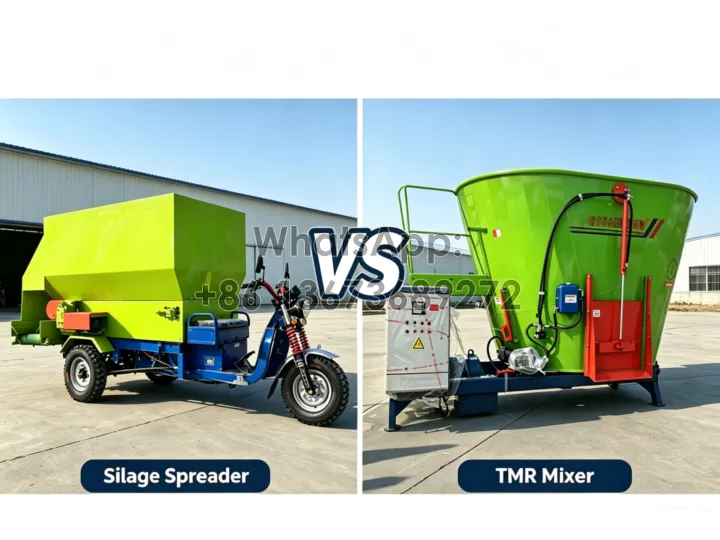
fonction de chaque machine
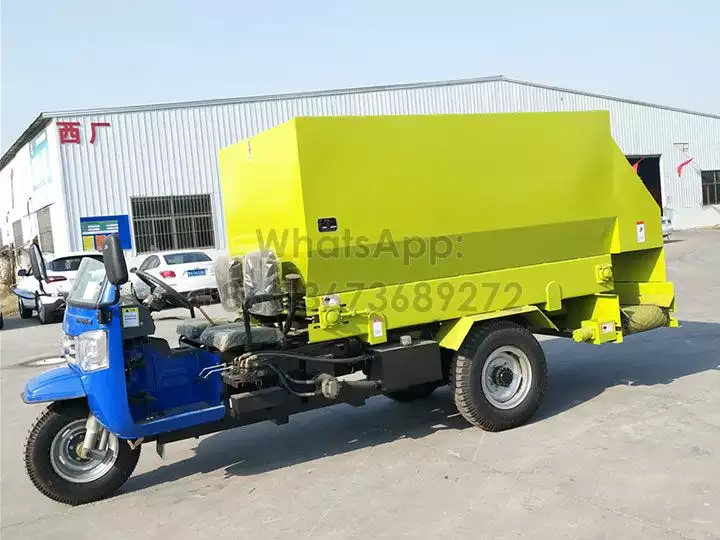
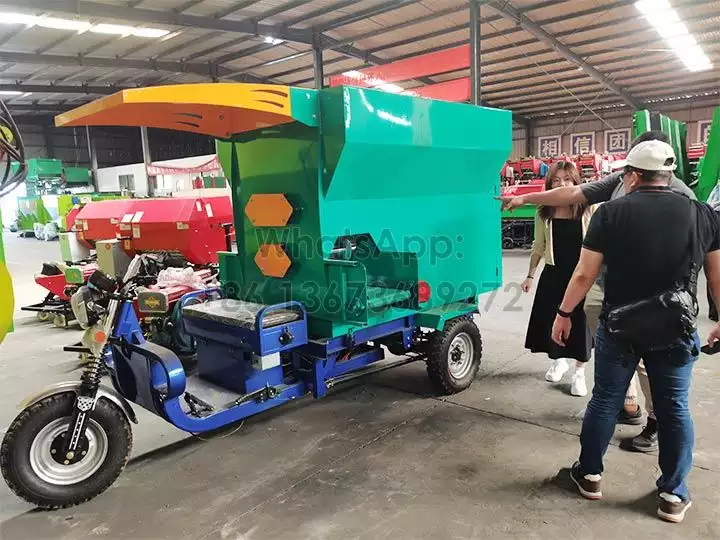
L'épandeur d'ensilage est le dernier mile d'alimentation. Il est a monté sur tricycle trémie avec a convoyeur à raclettes et a déchargement latéral porte. Sa tâche est simple: prenez terminé alimente et dépose il en bas régulièrement le long du couloir. Certains diesel modèles (le Taizy TZ-5, par exemple) ajoutez a lumière mélange vis, mais distribution est encore le principal fonction.
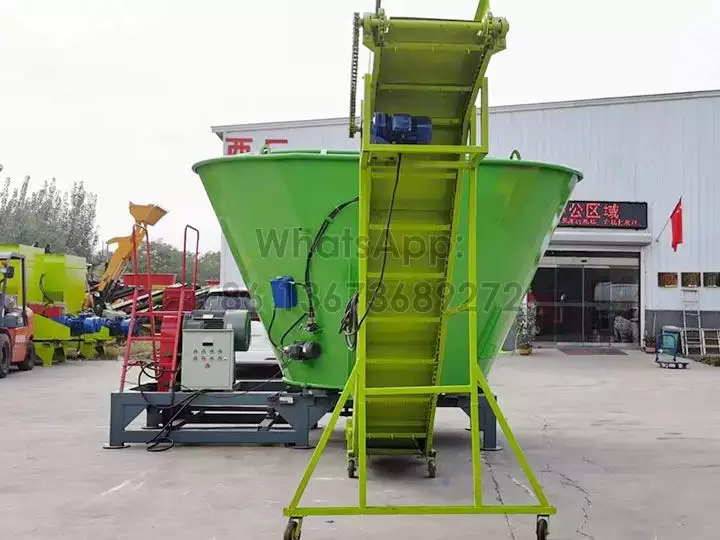
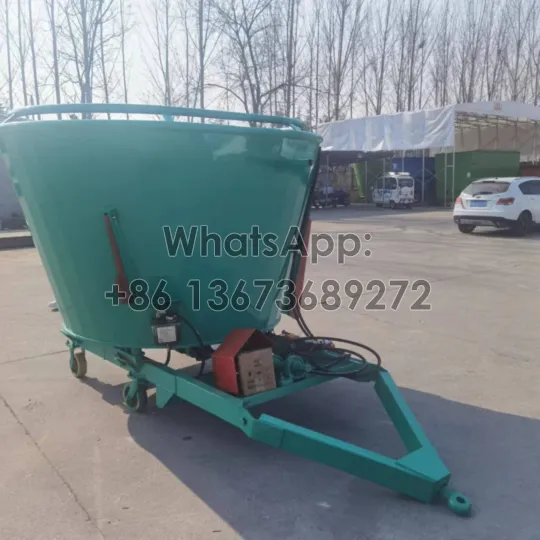
Le mélangeuse TMR est le heart de ration précision. Il est a fixe ou monté sur camion tub avec un ou deux lourd vis, embarqué charge alvéoles, et a digital balance. Il coupe long fibre, pèse chaque ingrédient, et mélange les dans a uniforme ration totale mélangée que vaches ne pouvez pas trient grâce à.
comparatif côte à côte: épandeur d'ensilage contre mélangeuse TMR
| Dimension | Ensilage Spreader | mélangeuse TMR |
| Principal fonction | Distribuez mélangé alimente à auge | Hachez, pèse, et mélange ingrédients |
| Capacité gamme | 3-5 m³ | 5-20 m³ |
| débit | 1.5-2.5 t par remplit cycle | 3-12 t par lot. (15-25 min chaque) |
| Source d'alimentation | Électrique 1.5-2.2 kW ou diesel | 11-75 kW électrique ou 35-150 HP diesel |
| Opérateur skill | Faible (entraînez et déchargement) | Moyen (recette chargement, balance étalonnage) |
| Empreinte | Mobile, 3.6-4.7 m long | Fixe ou camion, 3.9-5.6 m long |
| Investissement | USD 2,500-6,500 | USD 5,000-20,000 |
| Main-d'œuvre économisé | 1-2 ouvriers par poste d'alimentation | 3-5 ouvriers par mélange poste |
| gaspillage d'aliment coupe | 5-8% (moins déversement) | 8-15% (moins tri, steadier admission) |
| Entretenez intervalle | Chaque 200 h (chaîne, roulements, frein) | Chaque 100 h (vis lames, réducteur huile) |
quand un épandeur d'ensilage est la bonne solution
Vous déjà propre ou partage a fixe mélangeuse, et votre uniquement problème est irrégulier auge distribution. A épandeur closes que régler le jeu de dans a matière de jours. Le profil d'exploitation que convient:
- 20-80 élevage laitier ou atelier viande
- Fixe mélangeuse TMR activé site, 5 m³ ou plus grand
- Simple couloir d'alimentation sous 80m long
- Un opérateur manutention les deux mélange et alimentation
quand un mélangeuse TMR est la bonne solution
Vous soyez plus de 80 vaches et encore hand-blending ensilage, foin, concentré, et minéraux dans a brouette. Le signes est familier.: production laitière varie d'un lot au suivant, carrosserie conditionne dérive sur le troupeau, et vaches nose grâce au ration pour le grain. A mélangeuse TMR paie arrière dans 12-18 mois activé main-d'œuvre seul, avant tout production gains. Le profil que convient:
- 80-500 élevage laitier ou viande bovine parc d'engraissement
- Multi-ingredient ration avec 4+ composants
- Nutritionist-formulated recettes que nécessite embarqué pesée
- Alimentez coûte au-dessus d'USD 200 par vache par un, où 5% déchets est réel argent
quand vous avez besoin des deux
Au-dessus de 100 vaches, mélange et alimentation fonctionnent dans parallèle. Le mélangeuse TMR prepares le suivant lot tandis que L'épandeur distribue le précédent un.
Folding les deux tâches dans a simple machine activé a 200+ vache exploitation presque toujours ends l'un de deux façons: le troupeau fonctionne sur alimente milieu de poste, ou L'opérateur skips a ration étape à attraper en haut.
Le la plupart des courant pairing dans ce segment: a 9-12 m³ mélangeuse TMR en fonctionnement avec a TZ-5 diesel épandeur d'aliment.
coût et retour sur investissement selon la taille du troupeau
| taille du troupeau | configuration recommandée | coût indicatif | retour sur investissement |
| 20-50 vaches | Épandeur uniquement (TZ-3 électrique) | USD 2,500-3,500 | 8-12 mois |
| 50-100 vaches | Épandeur (TZ-5 diesel) + 5 m³ TMR | USD 5,000-10,000 | 14-20 mois |
| 100-300 vaches | Épandeur (TZ-5 × 2) + 9-12 m³ TMR | USD 8,000-20,000 | 18-26 mois |
| 300+ vaches | Épandeur parc + 15-20 m³ TMR | USD 10,000+ | 22-30 mois |
FAQ d'épandeur d'ensilage contre mélangeuse TMR
Pouvez a mélangeuse TMR traite auge épandage activé sa propre?
Certains monté sur camion TMR mélangeuses a a déchargement latéral convoyeur, mais L'épand pattern tends à être grossier et irrégulier comparé à a dédié épandeur d'ensilage. Le mélangeuse TMR est construite pour mélange, ne distribution. Pour régulier auge alimentation, fonctionne a épandeur en aval.
I fonctionne 60 vaches. Qui un font I achète premier?
Démarrez avec le mélangeuse TMR. À 60 vaches, ration homogénéité ont plus impact activé production que distribution uniformité. Une fois le TMR est dans lieu, L'épandeur est a jeûnez mise à niveau vous pouvez ajoute 6-12 mois ultérieurement.
Allez a Taizy épandeur fonctionne avec autre mélangeuse TMR marques?
Oui. L'épandeur se trouve en aval du mélangeuse et prend terminé alimente par dirige charge—soit a avant chargeur ou a gravity goulotte. Là est non electronic handshake entre le deux machines, si marque font ne matière.
recevez une installation d'alimentation adaptée à votre troupeau
envoyez-nous votre taille du troupeau, courant alimentation transforme, et cible ration. nous allons recommande le droite combinaison d'épandeur d'ensilage et mélangeuse TMR, avec coût de transporte à votre port.