Kuilvoer Spreader vir Small vs Large Plase: watter Kapasiteit Matches U se Bedryf?
Die single meeste algemeen vraag ons kry vanaf kuilvoer spreader kopers is sommige weergawe van: “Hoe groot behoort dit wees?” die verkeerd antwoord koste werklik money. 'N 5m³ beeste voer spreader op 'n 30-koei plaas is 30% dood gewig en 'n extra USD 1,500 spent op diesel. 'N 3m³ spreader op 'n 200-koei plaas means 6-7 fill siklus per voeding skof, watter is presies die arbeid koste die spreader was supposed tot eliminate. Here is 'n skoon besluit map.
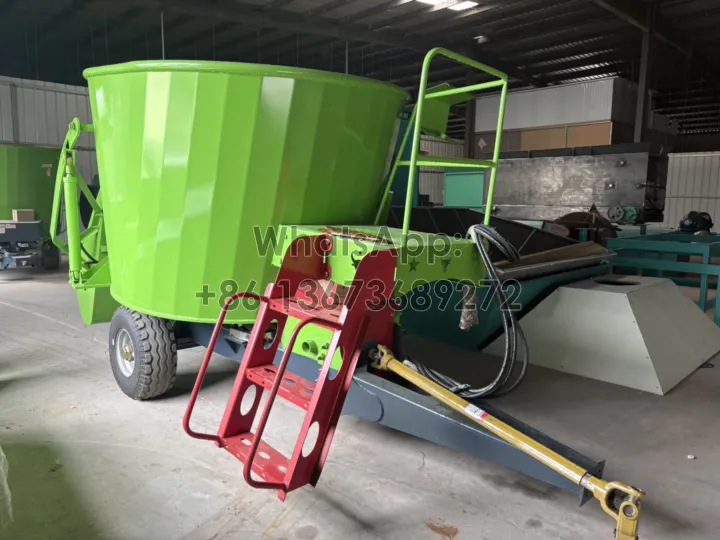
Small Plase: 20-50 Koeie
Aanbeveel model: Taizy TZ-3 elektries, 3m³ bak, 3600×1500×2000mm. Hoekom hierdie grootte fits:
- Een fill hanteer 1.5-1.8 ton van gemeng TMR — enough vir 30-40 koeie per meel.
- 72V battery met 6 sel bedryf 2-3 fill siklus op 'n single heffing (4-5 ure van uitlaat werk).
- 1.5/1.5/2.2 kW motors draw minder as 'n household droër — bedryf op single-fase 220V met 'n small inverter of generator.
- Footprint fits deur standaard 2m skuur doors; rear-wiel R3.50-12 + R5.00-12 band hanteer verpak-earth floors.
Indicative prys reeks: USD 2,500-3,800.
Mid-Grootte Plase: 50-150 Koeie
Aanbeveel model: TZ-5 diesel, 5m³ bak, 4700×1700×2200mm. Die jump vanaf elektries tot diesel here is nie oor krag—dit’s oor nie stopping mid-skof tot heffing. By hierdie kudde grootte, die spreader bedryf 3-4 siklus per voeding skof; 'n 72V battery kan nie sustain daardie op 'n single heffing.
Die TZ-5 sluit in 'n integrated lig-meng auger, so dit kan ook serve as 'n basies menger if u don’t nog het 'n vaste TMR. Hierdie dual rol is meeste valuable in die 50-100 koei segment, waar aankope beide 'n 5m³ TMR menger (USD 8,000+) en 'n separate spreader (USD 5,000+) is hard tot justify. Eenmaal u kruis 100 koeie, die dual-funksie kompromie hurts rantsoen consistency en u behoort separate die twee rol.
Indicative prys reeks: USD 4,800-6,500.
Large Plase: 150-500 Koeie
By hierdie scale, 'n single 5m³ spreader word die bottleneck. Die math: 300 koeie × 25 kg TMR = 7.5 ton per meel. 'N 5m³ spreader dra 1.8-2.0 ton per siklus, so 4 fill siklus is benodig. Met 8-10 minute per siklus (vrag + reis + uitlaat + keer terug), een spreader is occupied vir 35-40 minute per meel, verlaat zero buffer vir onderbreking of ongelyk voer alley access.
Aanbeveel opstelling: twee TZ-5 diesel eenhede lopende in parallel, of een TZ-5 paired met 'n vragmotor-gemonteer TMR menger met side uitlaat. Die twee-spreader benadering het laer kapitaal risk—een eenheid af vir instandhouding moenie stop die bedryf. Indicative belegging: USD 10,000-14,000 vir die pair.
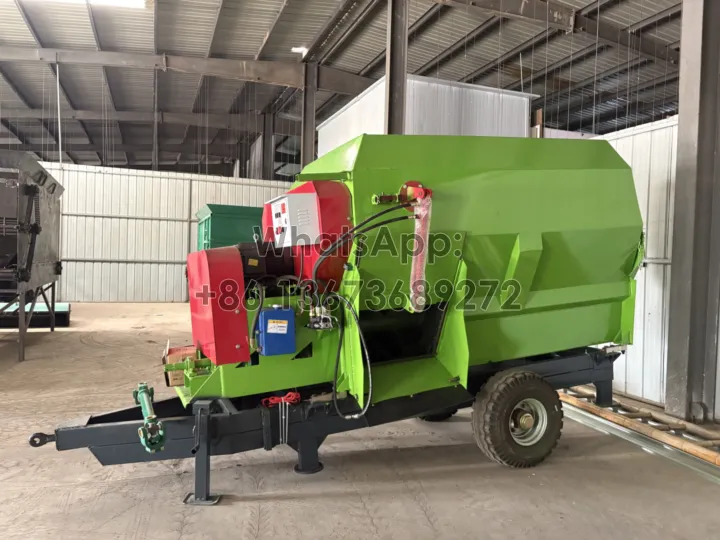
XL Bedrywighede: 500+ Koeie
Buite 500 koeie, driewiel spreaders bereik hulle limit. Die reis distance vanaf die meng stasie tot die far end van die voer alley exceeds 100m, en die rond reis neem 8-10 minute van empty reis per siklus. By daardie punt die right werktuig is 'n vragmotor-gemonteer TMR menger met side uitlaat band (Taizy 5m³ vragmotor-gemonteer model met 80cm laai hoogte en 5400×2300×2300mm footprint). Hierdie konfigurasie hanteer 200+ ton per dag en vervang 2-3 driewiel spreaders terwyl sny arbeid tot 'n single operateur.
Kapasiteit vs Koste Opsomming
| Kudde Grootte | Spreader Opstelling | Kapasiteit per Siklus | Belegging (USD) |
|---|---|---|---|
| 20-50 | 1× TZ-3 elektries | 1.5-1.8 t | 2,500-3,800 |
| 50-150 | 1× TZ-5 diesel | 1.8-2.0 t | 4,800-6,500 |
| 150-300 | 2× TZ-5 diesel | 3.6-4.0 t | 10,000-14,000 |
| 300-500 | 2× TZ-5 + vragmotor-gemonteer TMR | 5-6 t | 25,000-35,000 |
| 500+ | Vragmotor-gemonteer TMR met uitlaat | 8-10 t | 35,000+ |
GEV van Kuilvoer Versprei Masjien
Kan Ek opgradering vanaf 3m³ tot 5m³ later deur swapping bak?
Geen. Die TZ-3 en TZ-5 gebruik verskillende onderstel raam, as ratings, en conveyor wydte. Opgradering means aankope 'n nuwe driewiel, nie net 'n nuwe bak. Plan vir die kudde grootte u’ll bereik in 3-5 jaar, nie vandag’s headcount.
Is 'n 5m³ spreader overkill vir 'n 60-koei plaas?
Nie necessarily. If u plan tot kweek tot 100+ koeie in 2-3 jaar, die 5m³ diesel TZ-5 is 'n smarter lank-term koop. Net wees bewus daardie by 60 koeie u’ll bedryf dit by 40-50% kapasiteit, watter means slightly meer voer residu in die bak en 'n minder stabiel vrag. Bedryfs- dit werk; ekonomiese dit’s 'n 1-2 jaar besluit tot grootte op vroeg.
Doen die driewiel benodig 'n spesiaal license tot bedryf op public roads?
Regulations vary deur land. In meeste Afrika- en Southeast Asiaties mark, die driewiel spreader is klassifiseer as plaas machinery en moenie vereis 'n road license if gebruikte op private plaas roads. Vir vervoer tussen plase, dit kan gewoonlik wees hauled op 'n flatbed vragmotor. Tjek plaaslik regulations voor aankoop.
Kry 'n Kudde-Grootte Aanbeveling
Deel u se huidig en 3-jaar projek kudde grootte. Ons’ll beveel aan die spreader kapasiteit en konfigurasie daardie matches u se groei path.