How to Wrap Silage Bales: Step-by-Step with a Round Bale Wrapper
Bale it, then wrap it within two hours—that single rule decides more silage quality than the machine you buy. A properly wrapped round bale receives 4-8 layers of 500 mm stretch film at 50% overlap, takes 60-120 seconds on a modern wrapper such as the Taizy 4QM-1200 silage wrapper, and then keeps forage stable for 12-24 maanden in the field, without a silo, without preservatives, without refrigeration.
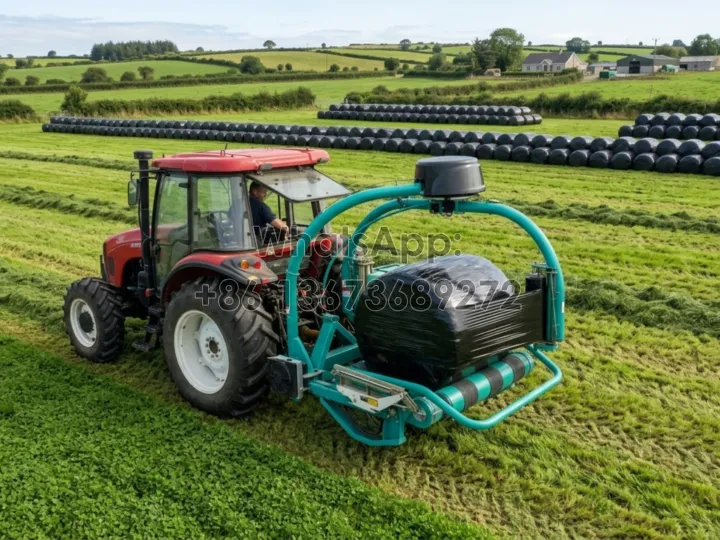
This guide covers the full wrapping workflow—from baling condition through film layers, machine setup, the step-by-step cycle, mistake diagnosis and storage. It is based on the machines Taizy delivers to dairy and beef operations in Kenya, South Africa, Pakistan, Ireland, Australia and Indonesia: the 4QM-1200 double-film wrapper, the TZ-55-52 corn silage baling and wrapping machine, en de 9YDB-100 towed-type haylage baler.
Why Wrapping Decides Whether Your Silage Succeeds
Silage is preserved by fermentation, not by drying. After chopping, the naturally present lactic acid bacteria need three conditions to do their job—and wrapping is what controls two of them:
- No oxygen. Stretch film applied under tension clings to the bale surface and seals it airtight. Any oxygen left inside keeps plant respiration running, which burns sugars and heats the bale.
- Correct moisture. Corn silage ferments best at 60-70% moisture, grass and alfalfa haylage at 50-60%—see the silage baling materials comparison here.
- Time. Fermentation needs 4-6 weeks of undisturbed sealing. A single puncture lets mold in long before the pH has dropped.
Wrapping is therefore not a finishing touch—it is the moment the bale stops being chopped grass and becomes a sealed fermentation vessel. If you want the full picture of what makes a good bale before the film goes on, start with how to bale silage step by step.
What You Need Before the First Bale
| Item | Specificatie | Opmerkingen |
|---|---|---|
| Round bales | Φ900-1100 mm diameter, 850-1000 mm wide, ≤500 kg | Dense, evenly shaped bales wrap better—fix baler tension first |
| Wrapper | 4QM-1200 tractor-mounted (≥90 HP, 30 L/min hydraulic flow, 12 V) or integrated baler-wrapper | Double 500 mm film rolls halve cycle time vs single-roll units |
| Stretch film | 500 mm width, 25 µm, 50% pre-stretch; one 1500 m roll wraps roughly 60-80 bales | White/UV film for outdoor storage beyond 6 months |
| Tractor | ≥90 HP, Cat I/II 3-point hitch, two double-acting remote valves | Lift capacity ≥900 kg for safe handling with a loaded table |
| Vochtmeter | Range covering 40-80% | Bale too dry and the film seals air into poor silage; too wet and it goes sour |
| Storage site | Level, well-drained pad; bale spear or wrap-safe grab | Clear stubble, stones and old wire from the pad before bales land |
How Many Layers of Silage Film Do You Need?
Layer count is the one setting you should never economize on. Set it on the wrapper’s control panel according to storage period and conditions:
| Layers | When it is enough | When to step up |
|---|---|---|
| 4 layers | Use within 6 months, cool climate, short distance from field to feed bunk | Anything longer or hotter than this |
| 6 layers | Standard choice: up to 12 months storage, most smallholder and mid-size dairy operations | Contract work, rough handling, tropical sun |
| 8 layers | 12-24 months, high-UV regions, sale bales, long truck transport | — |
The 4QM-1200 applies film from two 500 mm rolls simultaneously, so 6 layers build in roughly the same cycle time a single-roll machine needs for 3—this is why double-film wrappers are now the default for commercial silage work. A useful comparison of integrated wrapper configurations is in our TZ-55-52 VS 9YDB-55 wrapping machine analysis.
Step-by-Step: How to Wrap a Round Silage Bale
- Cut and chop at the right stage. Whole-plant corn is chopped by a side-mounted silage harvester or processed through a kuilvoer snijmachine at 1-2 cm theoretical length of cut. Chop length drives pack density, and density drives fermentation.
- Bale at target moisture. Check with the moisture meter before baling: 60-70% for corn, 50-60% for grass. A firm, evenly shaped bale from the baler’s chamber exit wraps tighter than a soft one—never try to rescue a loose bale with extra film.
- Respect the 2-hour window. Move bales to the wrapper within one to two hours of ejection. Every hour of delay lets trapped oxygen keep respiration running; if you must hold longer, pile bales and cover them with a tarp.
- Hitch up and test. Mount the wrapper on the 3-point hitch, connect the two hydraulic remotes and the 12 V lead, and run one empty cycle: confirm table rotation, film dispenser turn and the cut-and-tie action before the first real bale.
- Load the bale centered. Roll or lift the bale onto the wrapping table so it sits square and centered. An off-center bale wobbles, and a wobbling bale wraps unevenly.
- Set layers and start. Select 4, 6 or 8 layers per the table above. The table rotates while the film dispensers travel up and down the bale face, applying film at 50% overlap and about 50% pre-stretch, so the layers knit into a single skin.
- Cut, tuck and check the seal. At the end of the cycle the machine cuts and tucks the film. Walk around the bale: press the end faces, look for loose skirts or bridged film, and patch any puncture with repair tape the same day—never leave a hole for fermentation to find.
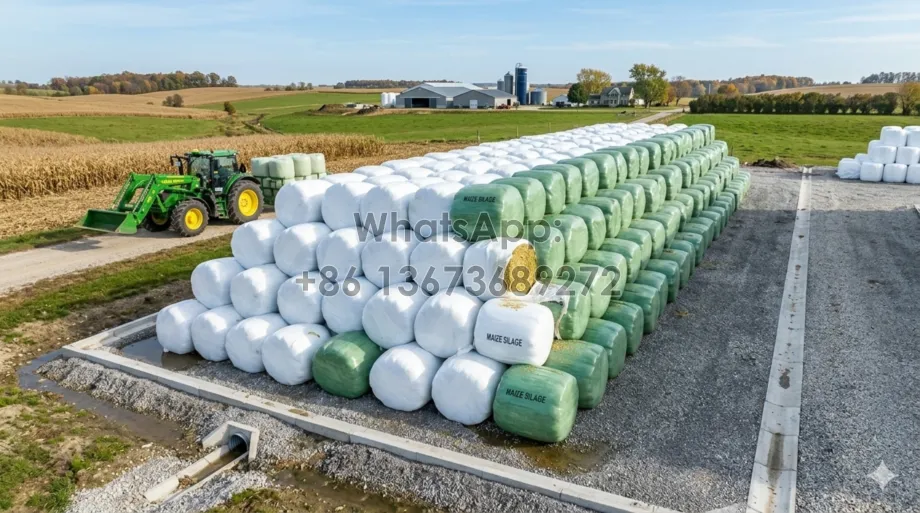
- Move and stack gently. Use a wrap-safe grab or end spear; avoid side spears unless the bale feeds within days. Stack no more than two high on the drained pad, keep sharp objects out, and date-label each batch so you feed out oldest-first.
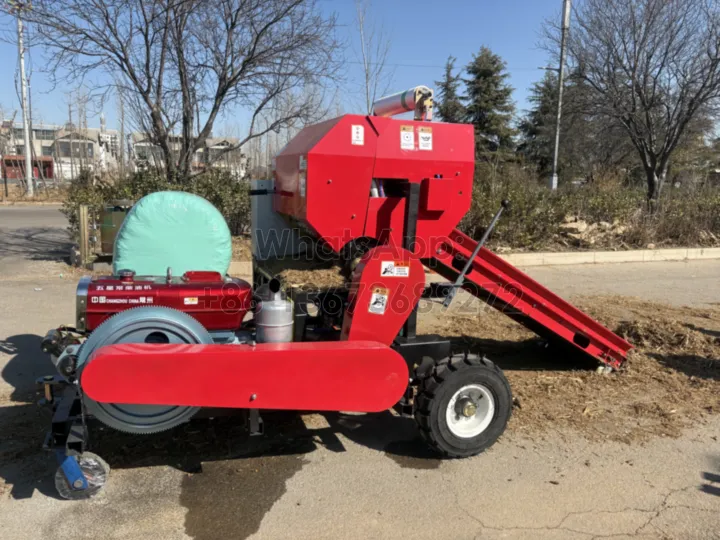
In real field conditions—with loading, alignment and film changes counted—expect 20-30 bales per hour from a single-operator tractor-mounted wrapper. Two such machines keep pace with one mid-size kuilvoer balenpers during the corn window.
Standalone Wrapper or Baler-Wrapper Combo?
There are two ways to put film on a bale, and the right one depends on your scale:
- Integrated baling & wrapping machine (TZ-55-52 class): one machine handles baling and wrapping in a single pass—the bale is wrapped inside the chamber before it ever touches the ground. Choose it when you want one tractor, one operator, and the shortest possible time from standing crop to sealed bale.
- Standalone round bale wrapper (4QM-1200): wraps bales made by any compatible baler, including bales you already own equipment for. Choose it when you already have a baler, when bales come from multiple fields or suppliers, or for a contract-wrapping service.
Price and payback differences between the two paths are covered in the silage baler and wrapper price guide.
Common Wrapping Mistakes and How to Fix Them
| Mistake | How you spot it | Fix |
|---|---|---|
| Waiting too long to wrap | Bales hot to the touch, brown/tan cast on the surface | Wrap within 2 hours; tarp bales if the film run falls behind |
| Too few layers or poor overlap | Bale “breathes” or swells; mold rings at the seam | Go to 6-8 layers; check film roll position and dispenser travel |
| Punctures ignored | Visible bubbles, localized soft spots | Patch with repair tape same day; re-check the stack after 2 weeks |
| Rough handling with side spear | Shattered film skirts at the bale end after moving | Use end spear or wrap-safe grab; stack max two high |
| Wrapping the wrong moisture | Sharp vinegar smell, wet rot or dusty undigested bale when opened | Measure before baling—film seals whatever quality you put under it |
Storage and Feeding Out Wrapped Bales
A sealed bale on a clean, drained pad keeps 12-24 maanden. Walk the stack monthly and re-tape any damage—birds, rodents and wind-rubbed wire are the usual suspects. Once opened, a bale should be fed out fast: move at least a full face every few days so no second fermentation starts on the exposed surface. Round bales go straight into a TMR Voermenger if the ration is chopped downstream, or through a hooi baal versnipperaar first when you need loose, metered feed for sheep, goats or small dairy herds. The full feeding-side workflow is in our silage feeding systems guide.
What Does Wrapping Cost per Bale?
Film is the main consumable: at 6 layers and 50% pre-stretch a Φ1000 × 850 mm bale uses about 0.4-0.5 kg of film, and one 1500 m roll covers roughly 60-80 bales. At typical market film prices that lands around USD 1-2 of film per bale (illustrative reference, varies with film rate and layer count)—set against the value of a 400-500 kg bale of dairy feed, it is the cheapest insurance in the whole silage chain. Add one operator and tractor fuel, and the full per-bale economics—including what the bale is worth at your farmgate—are worked through in how much it costs to make a bale of silage.
FAQs About Wrapping Silage Bales
How long can silage bales sit before wrapping?
Wrap within 1-2 hours of baling for best results. Every hour of delay lets trapped oxygen keep plant respiration running, which burns sugars and heats the bale. If the wrapper falls behind, pile unwrapped bales and cover them with a tarp until film is applied.
How many layers of film should I wrap a silage bale with?
Four layers for use within 6 months in cool conditions, six layers as the standard for up to 12 months, and eight layers for tropical sun, contract bales, or storage and transport beyond 12 months. A double-roll wrapper such as the 4QM-1200 applies layers from two 500 mm rolls at once, so higher layer counts cost far less time than on single-roll machines.
Can I wrap silage bales with ordinary plastic sheeting?
No. Silage stretch film is engineered to pre-stretch about 50% and cling to itself under tension, shrinking into the bale surface to exclude oxygen. Ordinary sheeting cannot achieve that seal, traps air pockets, and degrades in UV within weeks.
Can you rewrap a damaged silage bale?
Yes, if you catch it early. Small holes can be patched with the same-brand repair tape. A bale with large tears or a heating core should be rewrapped the same day with a fresh full skin over the old film, and fed out first once fermentation has finished.
How do I know a wrapped bale fermented well?
A well-made bale opens smelling sweet and sour like pickles, with green-to-tan material and no gray mold faces. A putrid smell means oxygen or wrong moisture got in—check the film seal and the moisture at baling before blaming the wrapper.
What tractor do I need for a round bale wrapper?
For the Taizy 4QM-1200: a tractor of at least 90 HP with Cat I or Cat II three-point hitch, two double-acting remote valves delivering 30 L/min, a 12 V electrical outlet, and at least 900 kg of lift capacity for safe handling with a loaded table.
Get the Right Wrapping Setup for Your Herd
Tell us your daily bale target, the round bale size your baler produces, and your tractor model—we’ll confirm film configuration, layer strategy, and machine fit, whether you need a standalone wrapper or a baling-and-wrapping machine. WhatsApp: +86 136 7368 9272 · E-mail: info@taizyagromachine.com · Website: taizyagromachine.com.