Cosechadora-Empacadora Integral De Forraje
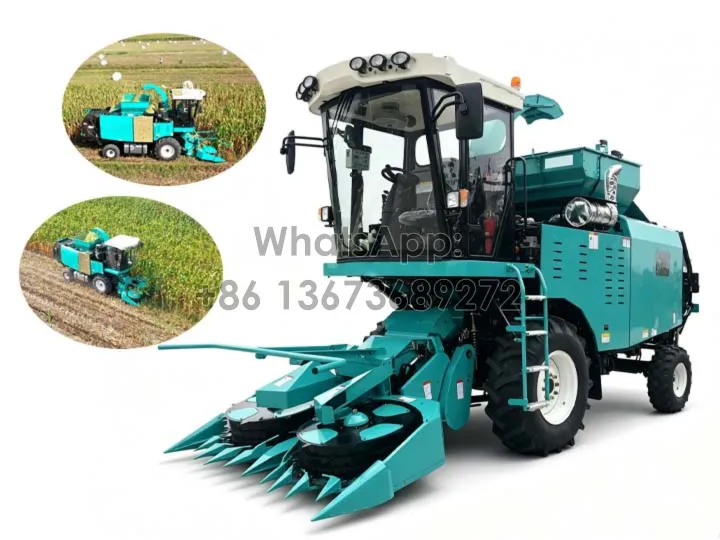
El 4QZ-M serie cosechadora-empacadora de forraje es una máquina autopropulsada ese combina cuatro trabajos en una pasada: en pie cultivo corte, tallo picado, almendra quebrantado, y cilíndrico empacado. Este produce 500 kg pacas cilíndricas En densidad de 750 kg/m³ con un contador-rollo grano índice de quebrantado por encima de 98%. Envolver el empacar dentro de tres minutos de descarga y usted tienen fermentación anaeróbica-listo ensilado con láctico ácido estabilidad para dos a tres años de exterior almacenamiento.
Un operario, una máquina, finalizado pacas en el suelo—no camiones de transporte en espera, no tractores de carga, no clima riesgo. Este es la máquina un 1,000-hectárea maíz operación, un 500-vaca lechero, o un personalizado cosecha contratista en alcanza para cuando el ensilado ventana es corto y el búnker silo puede’t mantener arriba.
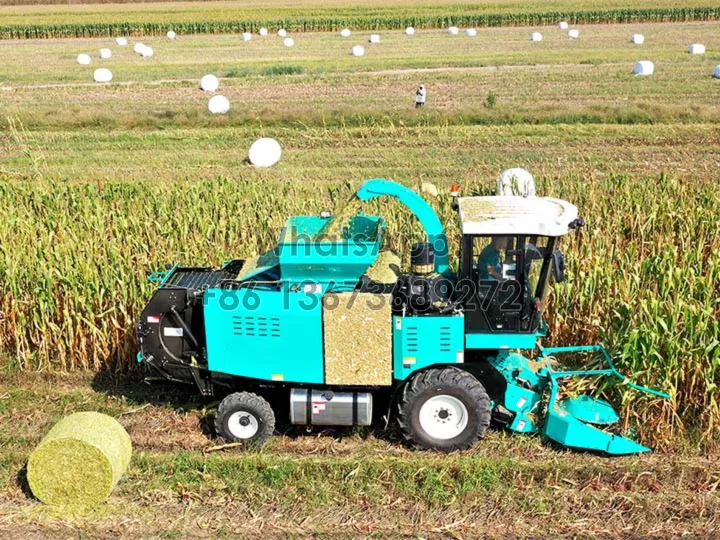
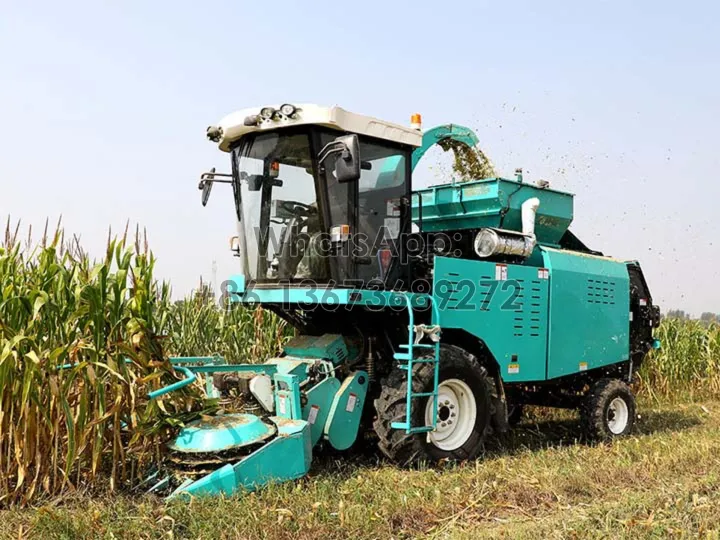
En funcionamiento Vídeo de Cosechadora-Empacadora De Forraje
Qué es una cosechadora-empacadora de forraje?
UN cosechadora-empacadora de forraje realiza la secuencia completa de cosecha de ensilado en una sola pasada: corte en pie verde forraje, picar el tallos a ensilado longitud, grieta las almendras a exoneración almidón, y comprimir el suelto material en un paca cilíndrica. UN diferencia de un tradicional búnker silo operación—que requiere una cosechadora, camiones de transporte, y un empacado tractor en funcionamiento alrededor de un fijo fosa—una cosechadora empacadora cae finalizado pacas en el campo para posterior envolturado y transportar.
El 4QZ serie resuelve el mayor problema de tradicional búnker ensilado: irregular empacado densidad. El refined material compression sistema produce un constante densidad de 750 kg/m³ en cada empacar. Hermético, uniformes pacas media mejor láctico ácido fermentación, menos aerobic deterioro, y un pienso producto ese puede ser vendido o transportado como un producto básico en lugar de consumed en-sitio.
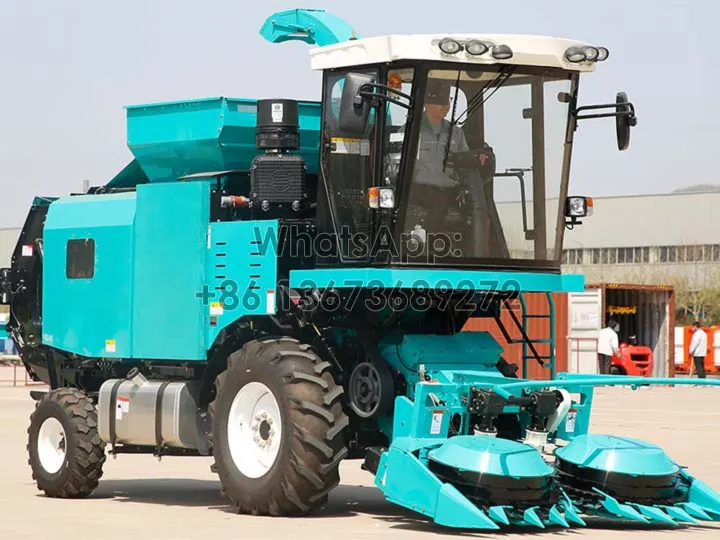
Dos Modelos, Mismo Empacar Especificación, Diferente Ancho De Trabajo
| Especificación | 4QZ-M2600 | 4QZ-M30(G4) |
|---|---|---|
| Tipo | Auto-propelled (auto-accionado) | Auto-propelled, wheeled chasis |
| Anchura de trabajo | 2600 mm | 2080 / 2200 mm (selectable) |
| Corte mesa | Cabezal de corte recto | Cabezal de corte recto con cortadora de discos |
| Peso | 8000 kg | 7500 kg |
| Min. altura libre sobre el suelo | 280 mm | 600 mm |
| Velocidad de trabajo | — | 0-6 km/h |
| Dimensiones (L×W×H) transportar | 7485 × 2800 × 3400 mm | 7000 × 2300 × 3400 mm |
| Dimensiones (L×W×H) en funcionamiento | 7485 × 2800 × 3715 mm | 7435 × 2350 × 3715 mm |
| Wheelbase / huella | Estándar wheeled | Wheelbase 2830 mm; steering rueda 1700 mm; accionar rueda 1670 mm |
| Neumáticos | Estándar ag neumáticos | Steering 10.0/75-15.3; accionar 15.0-24 |
| Tallo picado mecanismo | Tambor tipo | Tambor tipo |
| Grano quebrantado mecanismo | Contador-rollo (doble-rollo) | Contador-rollo (doble-rollo) |
| Alimentación mecanismo | Pienso rodillo | Pienso rodillo |
| Empacado mecanismo | Rollo barra tipo | Rollo barra tipo |
| Empacar dimensiones (Dia × W) | Φ1000 × 850 mm | Φ1000 × 850 mm |
| Peso de la paca | 500 kg | 500 kg |
| Accionar transmisión | Alto-bajo caja de engranajes + hidráulico | Alto-bajo caja de engranajes + accionamiento hidráulico |
| Mejor adaptar | Grande estado explotaciones, contratista fleets | Medium-grande explotaciones necesitando Japonés fiabilidad |
Características Principales y Ventajas de Cosechadora-Empacadora De Forraje
- Integrated cosecha y empacado en una pasada. El 4QZ serie elimina la necesidad para un separar camioneta vagón o transportar camión siguiente la cosechadora. Corte, picar, grieta, y empacar—finalizado pacas en el suelo como la máquina mueve hacia adelante.
- Contador-rollo grano quebrantado por encima de 98%. Completo-planta maíz ensilado con intact almendras pasadas a través del digestive tract ampliamente undigested. El doble-rollo cracker smashes cada almendra, releasing almidón ese la vaca converts en milk o el steer converts en peso ganar. Menos undigested grano en el estiércol, más energía en el ración.
- 750 kg/m³ densidad de la paca para la fermentación anaeróbica. UN hermético, uniforme empacar excludes oxígeno y suministra un estable entorno para láctico ácido bacterias. El resultado es inferior pH, superior láctico ácido, y un estable pienso ese mantiene 2–3 años outdoors si el envolver es intact.
- Refined compression tecnología (4QZ-M2600). El M2600 es un Chino-pioneer diseñar ese resuelve el largo-en pie problema de irregular empacado densidad en tradicional búnker silos. Cada empacar desde el M2600 tiene el mismo densidad, el mismo humedad reparto, y el mismo fermentación perfil.
- Japonés tecnología con importado clave componentes (4QZ-M30 G4). Crítico wearing piezas—rodamientos, hidráulico válvulas, electronic controla—venir desde Japonés proveedores. El resultado es un documentado bajo fallo índice y predecible mantenimiento intervals para explotaciones ese puede’t afford tiempo de inactividad en un 10-día ensilado ventana.
- Uno-operario flujo de trabajo. Desde cabina startup a finalizado empacar en el suelo, uno person dura el completo ciclo. El 4QZ-M30 G4 utiliza completo automático controlar—corte, convey, picar, grieta, empacar—sin un segundo operario.
- Rollo barra empacado cámara. Rollo barra produce superior densidad en inferior potencia, soporta stalky material sin slipping, y tolerates pequeño rocks y dirt clods sin cámara daño.
- 3-minuto sellado ventana. Caída el empacar, accionar 50 meters, devolver con la envolvedora, envolver dentro de 3 minutos. Rápido sellado locks en freshness y maximizes nutriente retención—especialmente el soluble azúcares y vitamins perdido en delayed búnker operaciones.
- Intercambiable cabezales. El cabezal de corte recto puede ser swapped para alternativa corte tables a manipular sorgo, mijo, alfalfa, o Pasto elefante sin compra un segundo máquina.
- Estandarizado pacas de 500 kg permitir commerce. UN 500 kg empacar en 750 kg/m³ es el tamaño adecuado para cargar en un plataforma, el correcto peso para un trabajador a manipular con un empacar tracción, y el correcto equipo para compra y venta ensilado como un producto básico en regional mercados.
- Inferior costo de mano de obra en el cosechar cadena. Sustituir un corte equipo, un transportar camión, un empacado tractor conductor, y un búnker operario con uno skilled cosechadora operario. En un personalizado cosecha trabajo, este es el diferencia entre un profitable temporada y un marginal uno.
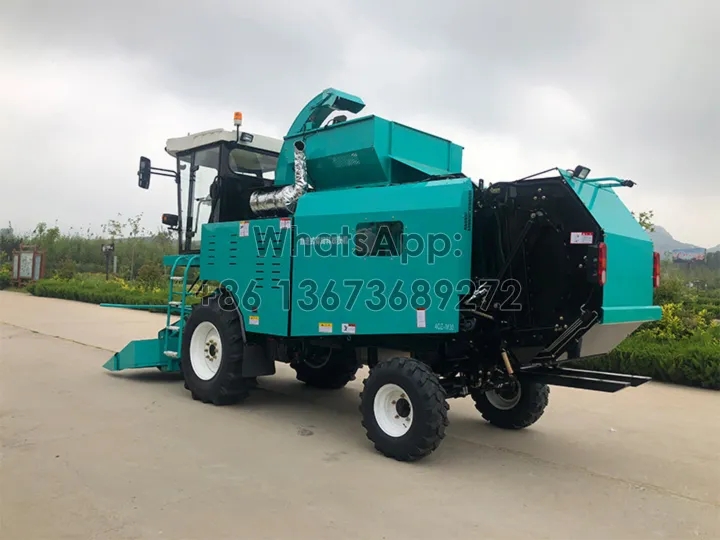
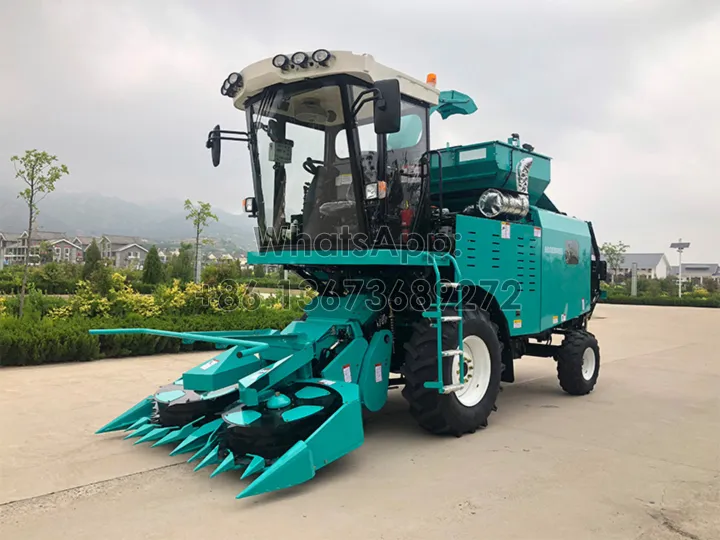
En funcionamiento Proceso: Desde En pie Cultivo a Sellado Empacar
- Corte. El cabezal de corte recto corta el maíz en pie desde la base. El cortadora de discos gira unas altas revoluciones para un corte limpio incluso en campos encamados o con maleza.
- Convey y picar. El corte cultivo mueve arriba el pienso rodillo en el tambor picadora. El tambor corto tallos a ensilado longitud (normalmente 10–30 mm) sin pulverizing hojas, preserving el digestible fibra fracción.
- Grieta grano. Material picado pasadas a través del contador-rollo cracker. Dos rollos operando en diferentes velocidades cortar cada almendra, releasing almidón para rumen microbes. Documentado índice de quebrantado por encima de 98%.
- Empacar. El picado, cracked forraje enters el rollo barra cámara, donde giratorio barras compactas el material en un 1000 × 850 mm cylindrical empacar. Objetivo peso 500 kg en densidad de 750 kg/m³.
- Descarga y envolver. El finalizado empacar es ejected sobre el molido. UN remolcado o seguir-arriba envolvedora aplica 4–6 capas de ensilado film. Con envolturado completado dentro de 3 minutos de descarga, láctico ácido fermentación begins dentro de un oxígeno-gratuito entorno.
El combinado ciclo tiempo de este cosechadora-empacadora de forraje es aproximadamente 60–90 segundos por empacar. UN 10-hora operando día en este índice produce 350–500 pacas—175–250 toneladas de finalizado ensilado listo para almacenamiento o venta.
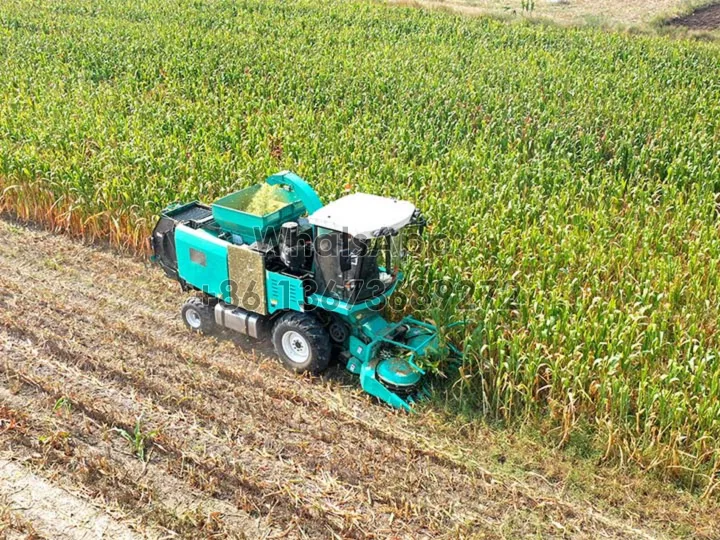
Compatible Cultivos y Cosechar Condiciones
| Cultivo | Típico Humedad en Empacado | Mejor Utilizar |
|---|---|---|
| Completo-planta maíz (maíz) | 60-70% | Lechero y vacuno de carne alto-energía ensilado |
| Sorgo | 65-72% | Sequía-región forraje, vacuno de carne ganado vacuno |
| Mijo y Sudan hierba | 65-70% | Hot-clima forraje |
| Alfalfa (previo-yema a temprano yema) | 55-65% | Alto-proteína lechero henolaje |
| Pasto elefante y pastizal mezclar | 65-75% | Tropical lechero forraje |
| Avena y cereal rye | 60-70% | Fresco-temporada forraje para fuera de-temporada pienso |
Para maíz y sorgo, el contador-rollo cracker abona para sí mismo en almidón digestibility. Para hierba y alfalfa, el tambor picadora conserva larga fibra para rumen salud. UN único 4QZ máquina cubre el completo anual forraje ciclo de la mayoría de mezclado ganado operaciones.
Cosechadora-Empacadora De Forraje frente a Tradicional Búnker Silo
| Factor | Tradicional Búnker Silo | 4QZ-M Serie Cosechadora Empacadora |
|---|---|---|
| Equipo cadena | Cosechadora + camiones + empacado tractor | Una máquina autopropulsada |
| Labor requerido | 4-6 trabajadores | 1 operario (+ 1 envolvedora operario) |
| Empacado densidad controlar | A menudo irregular | Uniforme 750 kg/m³ por empacar |
| Clima dependency | Alto (debe llenar y empacar mismo día) | Pacas wait en el campo hasta que envuelto |
| Capital inversión | Fijo búnker infraestructura | Móvil máquina, no fijo asset |
| Transportar y venta | Difícil a mover o vender | Estandarizado pacas de 500 kg son tradable |
| Almacenamiento flexibilidad | Único explotación ubicación | Pacas puede ser relocated, vendido, almacenado en ningún plano molido |
| Capacidad anual | Limitado por búnker tamaño | Limitado por operando horas, fácilmente scaled por añadiendo equipos |
El búnker silo es no obsolete—grande operaciones todavía utilizar este para base-cargar pienso. Pero para explotaciones ese desea a producir ensilado como un producto básico, serve múltiple sitios, o operar un personalizado cosecha negocio, el 4QZ-M serie es el moderno respuesta: móvil, estandarizado, y tradeable.
Cosechadora De Ensilado Empacadora Precio y Retorno de la inversión
La cosechadora-empacadora de forraje serie 4QZ-M tiene un precio de USD 100,000 (FOB). CIF precios a su más cercano puerto es disponible en solicitar—Contáctenos con su destino para un exacto cotización incluido envío en un contenedor 40HQ.
En este precio punto, el 4QZ-M sustituye un separar cosechadora, camiones de transporte, y un empacado tractor—equipo ese juntos normalmente costo USD 150,000–250,000—además el 4–6 trabajadores requerido para operar ellos. UN único 4QZ-M operario puede producir 175–250 toneladas de finalizado ensilado por 10-hora día, suficiente alimentar 500+ lecheras vacas o suministrar un personalizado cosecha equipo en funcionamiento 1,000+ hectáreas.
Para un 1,000-hectárea maíz operación produciendo aproximadamente 5,000 toneladas de ensilado por año, la máquina abona para sí mismo dentro del primero o segunda temporada de cosecha a través de labor ahorro solo—antes de rendición para reducido botadero desde uniforme densidad de la paca, el ability a vender excedente ensilado como un producto básico, y el elimination de fijo búnker infraestructura cuesta.
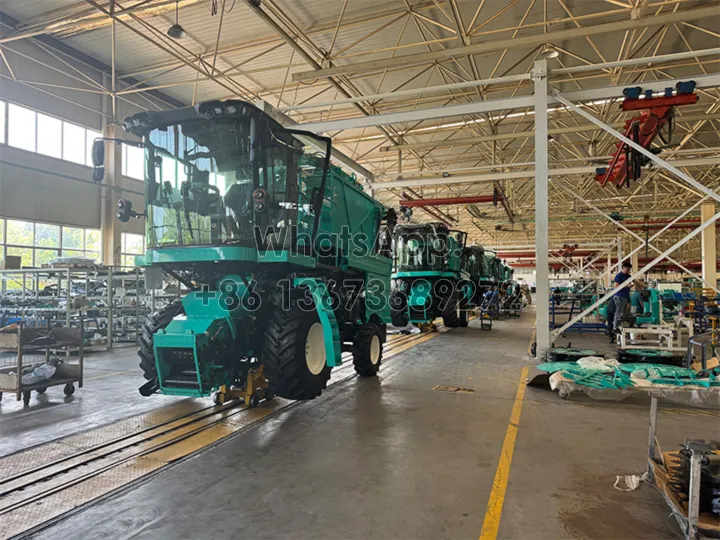
Cómo elegir Entre 4QZ-M2600 y 4QZ-M30(G4)
- Elegir 4QZ-M2600 si usted operar 1,000+ hectáreas de maíz, cosechar en 10-15 día windows, necesidad 2600 mm ancho de trabajo a cubrir más hileras por pasada, y operar en plano a gently rodadura molido donde 280 mm altura libre sobre el suelo es suficiente.
- Elegir 4QZ-M30(G4) si usted priorizar predecible uptime, desea Japonés-sourced crítico componentes, necesidad superior altura libre sobre el suelo (600 mm) para irregular o montañoso campos, y prefer el inferior fallo índice de una máquina construido alrededor de importado wearing piezas.
Ambos modelos compartir el mismo empacar tamaño y densidad, tan flota operarios puede operar mezclado M2600/M30(G4) fleets sin separar empacadora-especificación formación o diferente spare manipulación de pacas equipo.
PREGUNTA FRECUENTE para Cosechadora-Empacadora De Forraje
Qué es una cosechadora-empacadora de forraje?
UN cosechadora-empacadora de forraje es una máquina autopropulsada ese realiza la secuencia completa de cosecha de ensilado—corte, picado, quebrantado de grano y empacado cilíndrico—en una sola pasada. Este elimina la necesidad de cosechadoras independientes, camiones de transporte y tractores de carga.
Qué es el diferencia entre 4QZ-M2600 y 4QZ-M30(G4)?
El M2600 tiene un 2600 mm ancho de trabajo, 8000 kg peso, y 280 mm altura libre sobre el suelo para grande plano-terrain operaciones. El M30(G4) tiene un 2080/2200 mm ancho de trabajo, 7500 kg peso, 600 mm altura libre sobre el suelo, y utiliza Japonés importado componentes para inferior fallo tarifas en irregular terrain.
Qué es el grano índice de quebrantado del 4QZ-M serie?
El contador-rollo doble-rollo grano quebrantado mecanismo logra un documentado índice por encima de 98%, releasing almidón para rumen microbes y reducción undigested grano en estiércol.
Cómo muchos pacas puede el 4QZ-M producir por díun?
Con un 60–90 segundo ciclo tiempo por empacar, un 10-hora día produce 350–500 pacas (175–250 toneladas de finalizado ensilado).
Cómo hace el 4QZ-M comparar a tradicional búnker silo?
El 4QZ-M requiere 1 operario frente a 4–6 para búnker silo, produce uniforme densidad de 750 kg/m³ por empacar, elimina clima dependency, necesita no fijo infraestructura, y outputs estandarizado pacas de 500 kg ese puede ser transportado o vendido.
Cómo largo puede envuelto ensilado pacas ser almacenado?
Cuando envuelto dentro de 3 minutos de descarga, pacas mantener anaerobic estabilidad para 2–3 años de exterior almacenamiento con adecuado film integridad.
Obtener un 4QZ-M Serie Cotización
Cuéntenos su promedio campo tamaño, primario cultivo, esperado diario cosechar tonelaje, y objetivo empacar producción. Nosotros va a confirmar el correcto modelo (M2600 o M30 G4), compartir FOB y CIF precios a su más cercano puerto, y organizar el envío en un contenedor 40HQ con en-sitio puesta en marcha soporte.
Related Products
- Maíz Empacadora y envolvedora de ensilado — Standalone empacadora-envolvedora para material desde un separar cosechadora
- 9Q-900 Lateral-Montar Cosechadora De Ensilado — Compacto 900 mm tractor-PTO opción para pequeño y medio-escala explotaciones
- auto-propelled empacadora — Auto-propelled empacadora sin el integrated corte cabezal
- TMR Mezcladora de pienso — Mezclar el ensilado pacas en un completar ración mezclada
- Ensilado Spreader — Distribute el ración mezclada en el pienso comedero