Komple Silaj İşleme Hattı: Balyalama Feeding'e Modern Çiftlikler
200-cow süt modern çiftlikler, herd müdür kesmek günlük yemleme iş gücü 9 saat 3.5 wiring dört makineler içine tek silaj işleme hattı:
- Yem biçme makinesi
- Silaj balyalama ve sarma makinesi
- TMR mikser wagon
- Tricycle yem dağıtıcı
Payoff değil ekipman itself— workflow. Hayır daha fazla double-handling. Hayır silaj sitting open piles overnight. Aynı ration kalite her pen.
Komple silaj makine hattı değil shopping list. closed loop tarla yem bunk, ile hayır manuel transfer arasında. Burada nasıl beş stages uygun birlikte, ve nasıl ebat onları.
Stage 1: Kaba yem Hasat ve Pre-Kesmek
Mısır, sorgum, alfalfa, veya ot comes 60-75% nem. İki makineler cover en çiftlikler:
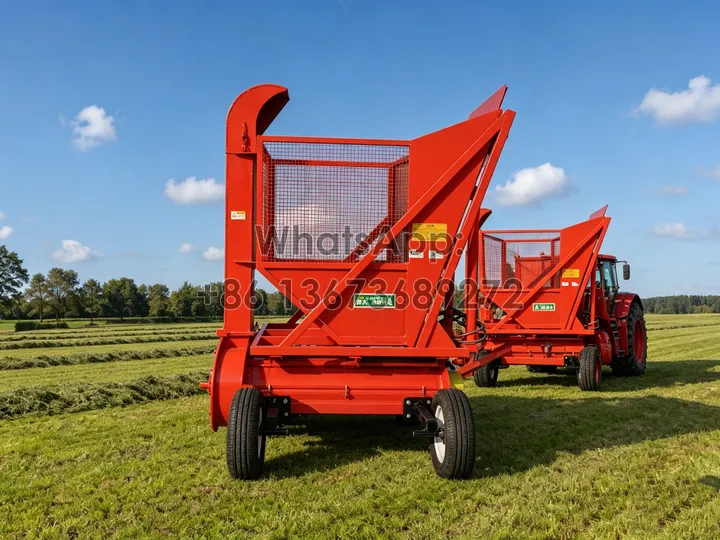
- Self-propelled yem hasat makinesi — için 100+ cow çalışma pulling 5+ tonnes başına saat across multiple tarlalar.
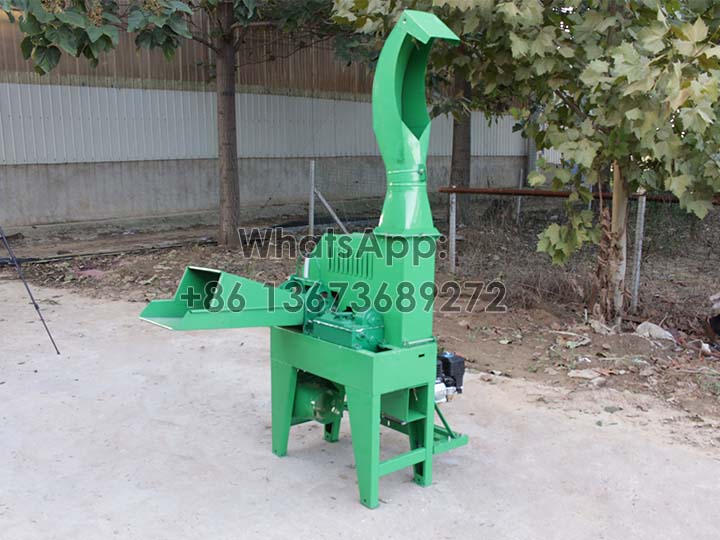
- Yem biçme makinesi/saman doğrama makinesi — için 20-100 cow çiftlikler doğrama barn. Çıktı çalışır 400 kg/h (elektrikli) 4 t/h (dizel).
Aim için 2-3 cm chop mısır silaj, 4-6 cm ot ve alfalfa. Herhangi bir şey longer hurts paketleme yoğunluk later ve yavaş fermentation.
Stage 2: Silaj Balyalama ve Streçleme (Optional, ancak Worth )
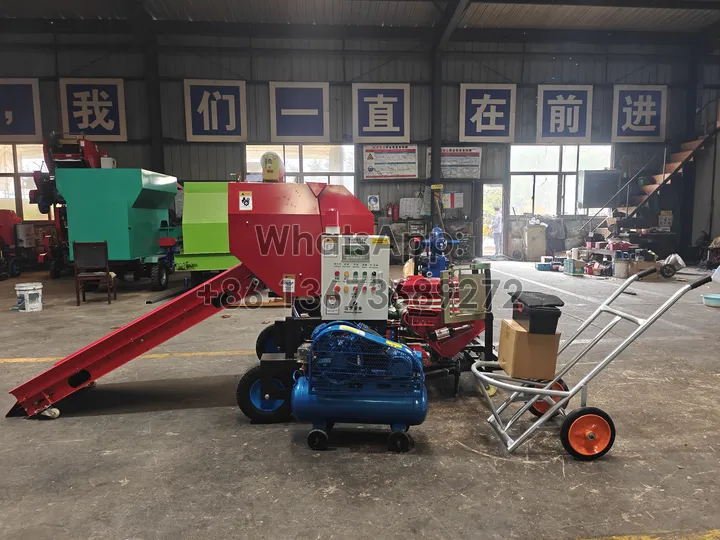
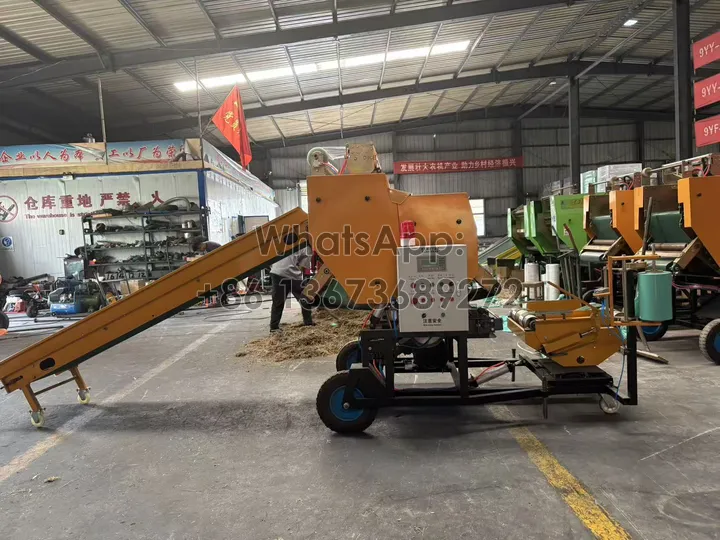
İÇİn çiftlikler bu depolayın silaj içinde balyalar rather than bunkers, silaj balya makinesi ve sarıcı workhorse. 10 2 turns out 3 yuvarlak balyalar başına saat (4 cm, 5 kg başına balya). Sarılmış balyalar koruyun için 6 aylar ile altında 15% kuru matter loss.
Skip bu stage yalnızca if siz zaten çalıştırmak sealed bunker silo ve istemek yem straight içine TMR mikser. İçin en Afrikalı, Middle Doğu, ve Southeast Asian çiftlikler olmadan bunker infrastructure, balyalar practical tercih.
Stage 3: Depolama ve Fermentation
Streçlenmiş balyalar ihtiyaç 6-8 hafta anaerobic fermentation önce siz open onları. Stack yetiştirmek gravel pad—direct toprak iletişim causes bottom spoilage içinde 3-4 hafta. Open balya 24-48 saat önce karıştırma let built butyric acid gas.
Stage 4: TMR Karıştırma
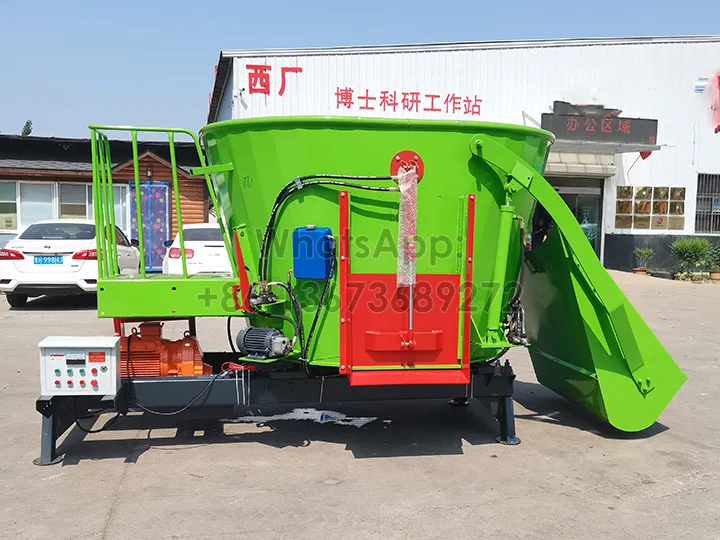
The TMR yem karma makinesi wagon nerede rasyon accuracy lives. vertical yem karıştırıcı (0 m³) karşılar bütün balyalar ve uzun fiber daha iyi. horizontal silaj yem karıştırıcı faster üzerinde pre-kıyılmış silaj ancak yapamazsınız tear açın balya.
Quick sizing rule: 1 m³ mikser bin holds roughly 200-250 kg mixed TMR. 100-cow süt yemleme 25 kg başına cow başına gün, çalışmalar 12-15 m³ mikser finish tek parti başına süt vardiya.
Stage 5: Yemleme ve Distribution
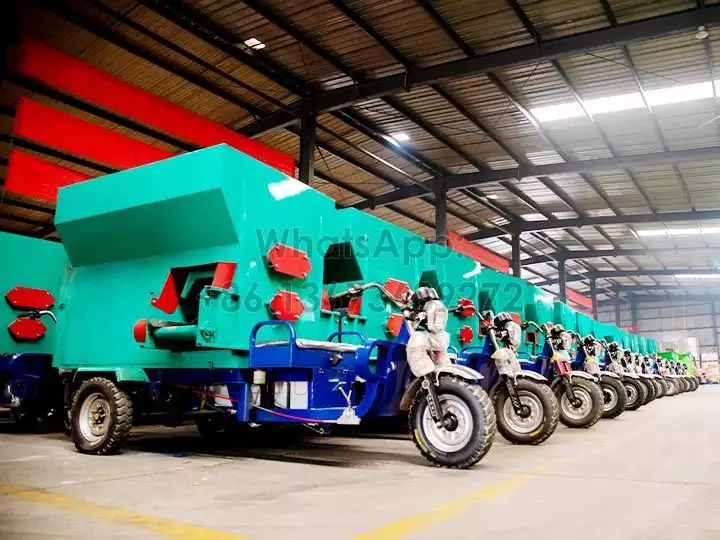
Son link silaj serpme makinesi— tricycle-mounted hazne bu drops karışık yem along alley. Bidirectional boşaltma (standart üzerinde 0 1 ve 2 lets bir operatör yem her ikisi sides 3m alley olmadan reversing. İşleme kapasİtesİ çalıştırır 3 tonnes başına fill cycle.
Sizing Herd Ebat
| Herd Ebat | Kaba yem Kıyıcı | Silaj Yuvarlak Balya makinesi | Yem karma makinesi | Silage Dağıtıcı |
| 20-50 cows | 1 t/h elektrikli | TZ-55-52 (optional) | 3-5 m³ | TZ-3 elektrikli 3 m³ |
| 50-150 cows | 2-3 t/h dizel | TZ-55-52 veya 9YDB-60 | 5-9 m³ | TZ-5 dizel 5 m³ |
| 150-500 cows | 4-6 t/h self-propelled | 9YDB-70 veya 90 | 12-20 m³ | TZ-5 dizel 5 m³ × 2 |
3 Yaygın Layout Mistakes Silaj İşleme Hattı
- Mismatched throughput. 4 t/h kıyıcı yemleme 2 t/h balya makinesi streçleme makinesi creates bottleneck. Korumak upstream kapasite içinde 20% downstream.
- Uzun transfer paths. Her extra 10m arasında mikser ve yem alley adds hakkında 5 minutes başına yüklemek. Korumak mikser içinde 30m largest pen.
- Hayır backup güç. Elektrikli mikser ve dağıtıcı stop moment grid drops. 10-15 kVA dizel generator covers 80% mid-ebat çiftlik ihtiyaçlar.
FAQ Kaba yem Silaj İşleme Hattı
I ihtiyaç tüm 5 stages için küçük çiftlik?
Hayır. 20-50 cow çiftlikler, skip silaj balyalama makine ve yem straight kıyıcı içine kombine mikser-dağıtıcı tricycle. tam 5-stage hattı başlamak ödemek above 100 cows.
I add stages later olarak my herd yetiştirmek?
Evet. En çiftlikler başlamak ile kıyıcı ve dağıtıcı, add TMR mikser around 50 cows, ve bring kaba yem balya makinesi 100+ cows once bunker depolama stops practical. Taizy makineler built için incremental scaling.
Ne ROI timeline için komple hattı?
İle 3-5 daha az işçiler başına vardiya ve 15-20% daha az yem atık open-pile silaj, en çiftlikler recover tam ekipman yatırım 14-22 ay. Orta Doğu sees fastest payback; regions ile cheap manuel iş gücü see slowest.
Planlamak Sizin Custom Silaj İşleme Hattı
Send bize sizin herd ebat, mevcut güç, günlük ration, ve hedef throughput. Biz draft layout ile makine teknik özellikler, konteyner yüklemek planlamak, ve toplam maliyet. Siz bizimle iletişime geçin zaman için detaylar!